
Monarchy Examples: 20 Monarchies From Ancient Egypt to the Present
Monarchy examples from every era and continent: ancient Egypt and Persia, medieval Byzantium and Mali, early modern France and the Mughals, and today's monarchies from the UK to Saudi Arabia and Japan.
Last updated September 2026
Contents9
- Monarchy examples from the ancient world
- Monarchy examples from the medieval world
- Monarchy examples from the early modern world
- Monarchy examples from the Americas before 1500
- Monarchy examples from the modern era
- Monarchy examples today, by type
- Monarchy examples in Asia today
- What the examples teach
- Verdict: the best monarchy examples
Monarchy examples can be found in almost every society that left written records. Kings and queens, sultans and pharaohs have ruled on every lived-in continent. This page sets out twenty examples across history, grouped by era. It then shows how today's monarchies fit the main types. Each example shows a different way monarchy has worked.
TL;DR: Early monarchy examples include Egypt's pharaohs, Persia, Rome and Byzantium. Later ones include Mali, the Holy Roman Empire and Louis XIV's France. They also include the Mughals, the Inca and the Russian tsars. Modern examples include the United Kingdom and Japan, which are ceremonial. Jordan has strong royal powers. Saudi Arabia is absolute, and Malaysia's king is elected.
Monarchy examples from the ancient world
| Monarchy | Dates | What it shows |
|---|---|---|
| Ancient Egypt | c. 3100-30 BCE | The pharaoh as a god-king who kept cosmic order |
| Akkadian Empire | c. 2334-2154 BCE | The first king to unite many cities: Sargon |
| Achaemenid Persia | 550-330 BCE | A "king of kings" ruling many peoples through governors |
| Maurya India | c. 321-185 BCE | Ashoka's rule by moral edict after conquest |
| Roman Empire | 27 BCE-476 CE in the West | An emperor who kept the forms of a republic |
Scroll for more →
The Roman case is unusual. Augustus never called himself king. Romans hated the title after they drove out their last king, around 509 BCE.
He called himself princeps, "first citizen", while he held the real power. See who was the first Roman emperor. For more early states, see the list of ancient cultures.
Monarchy examples from the medieval world
| Monarchy | Dates | What it shows |
|---|---|---|
| Byzantine (Eastern Roman) Empire | 330-1453 | An emperor seen as God's representative on earth |
| Holy Roman Empire | 800 or 962-1806 | An emperor chosen by princely electors |
| Kingdom of England | From the 10th century | A crown gradually limited by law and Parliament |
| Mali Empire | c. 1235-1600s | A mansa (emperor) rich from gold and trade |
| Mongol Empire | 1206-1368 | A khan chosen by an assembly of princes, the kurultai |
Scroll for more →
Mali's most famous ruler, Mansa Musa, made a pilgrimage to Mecca in 1324. Arab writers said he spent so much gold in Cairo that its price fell there. The Holy Roman Empire had an elected emperor. See the Holy Roman Empire page.
When did the Holy Roman Empire begin?
Start date of the Holy Roman Empire.
Status: Disputed Two dates are in common use.
Note: Some histories start the empire with Charlemagne's crowning as emperor in Rome on 25 December 800. Others start it with Otto I's crowning in 962. That began an unbroken line of German emperors. Both events are well recorded. The choice of start date is a matter of definition.
Sources: Britannica, "Holy Roman Empire"; World History Encyclopedia, "Holy Roman Empire".
Monarchy examples from the early modern world
| Monarchy | Dates | What it shows |
|---|---|---|
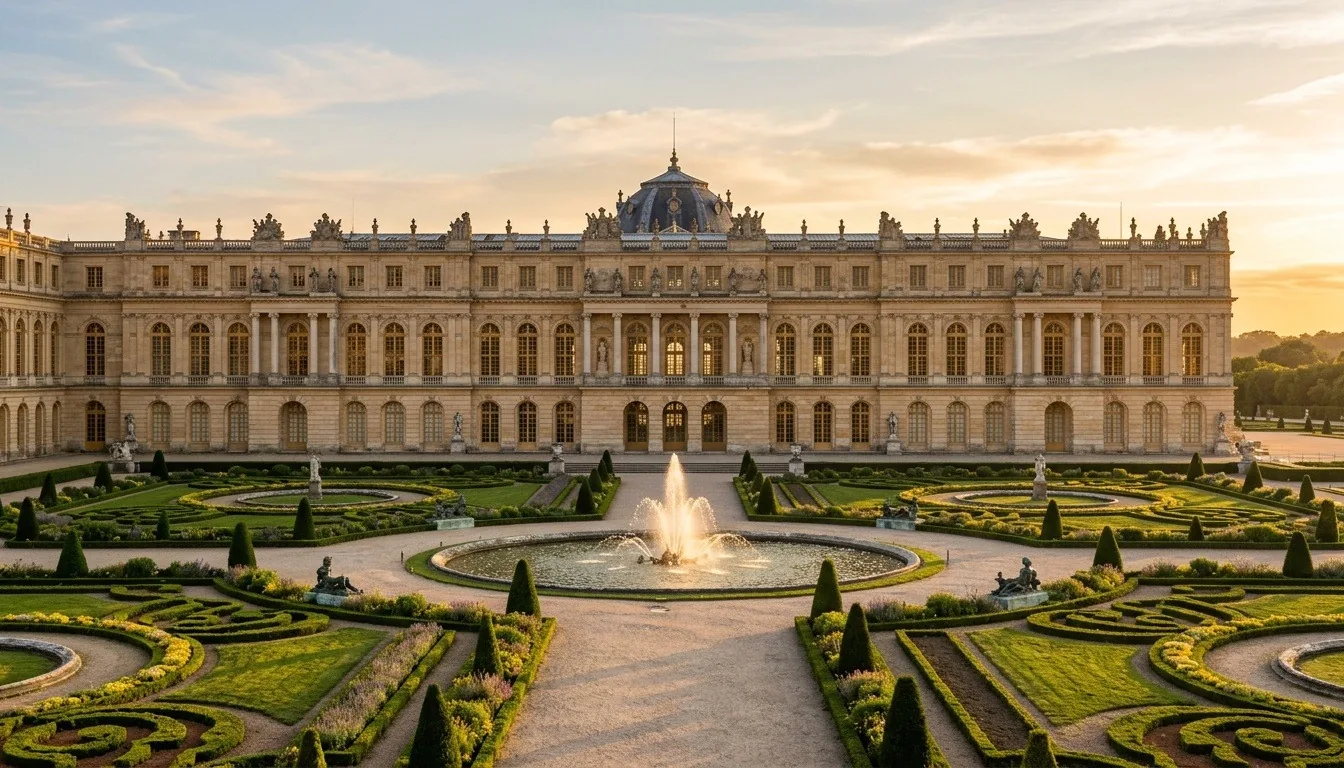
| France under Louis XIV | 1643-1715 | The model of absolute monarchy |
| Ottoman Empire | c. 1299-1922 | A sultan-caliph ruling across three continents |
| Mughal Empire | 1526-1857 | Emperors such as Akbar ruling a diverse South Asian empire |
| Inca Empire | c. 1438-1533 | The Sapa Inca, a divine ruler, governing without writing |
| Kingdom of Kongo | c. 1390-1914 | An African kingdom whose kings adopted Christianity in the 1490s |
| Russian Empire | 1721-1917 | Autocracy under the Romanov emperors |
Scroll for more →
These cases show absolute rule in very different settings, from Versailles to Cusco. For Russia, see the Romanov dynasty section. For absolute rule in general, see absolute monarchy examples.
Monarchy examples from the Americas before 1500
The Americas had monarchies of their own before Europeans arrived.
- The Aztec (Mexica) state was ruled by a tlatoani, "speaker", chosen by a council from the royal family. Moctezuma II ruled from 1502 to 1520.
- The Inca Empire was ruled by the Sapa Inca, seen as a son of the sun god. Huayna Capac's death around 1527 led to a civil war between his sons just before the Spanish invasion.
- The Classic Maya city-states each had a divine king, and their inscriptions record dynasties lasting centuries.
These examples show kingship growing on its own in the Americas. It was not borrowed from elsewhere.
Monarchy examples from the modern era
| Monarchy | Dates | What it shows |
|---|---|---|
| Kingdom of Hawaii | 1795-1893 | An island kingdom overthrown with American involvement |
| Ethiopian Empire | To 1974 | An ancient line of emperors ended by revolution |
| Kingdom of Nepal | 1768-2008 | A monarchy abolished by an elected assembly |
| Kingdom of Spain | Restored 1975 | A monarchy restored to lead a transition to democracy |
Scroll for more →
These four show how monarchies end, and how one came back. Hawaii's kingdom lasted about a century. It was overthrown in 1893, with American help. Ethiopia's line of emperors was very old.
A revolution ended it in 1974. Nepal's king lost his throne to a vote. An elected assembly ended the monarchy in 2008. Spain went the other way. Its king came back in 1975 and helped lead the move to democracy.
Monarchy examples today, by type
| Type | Example | Why it fits |
|---|---|---|
| Parliamentary | United Kingdom | The King reigns; ministers answerable to Parliament govern |
| Ceremonial emperor | Japan | The Emperor is "the symbol of the State" with no powers related to government |
| Strong royal powers | Jordan | The King appoints governments and can dissolve parliament |
| Absolute | Saudi Arabia | The King holds final authority over government and law |
| Elective | Malaysia | The nine Malay rulers elect the king for five years |
| Co-principality | Andorra | Two co-princes: a Catalan bishop and the President of France |
Scroll for more →
Andorra is the odd one out. It has two co-princes. One is a Catalan bishop. The other is the President of France. Neither lives there full time.
For the full list of today's monarchies, see countries having monarchy.
Monarchy examples in Asia today
Asia has six sovereign monarchies. Japan has the world's only reigning emperor, a ceremonial symbol. Thailand and Cambodia have constitutional kings.
A Throne Council chooses Cambodia's king. Malaysia elects its king from among nine hereditary rulers. Bhutan became a constitutional monarchy in 2008. Brunei's sultan still rules with near-total power.
What the examples teach
Three lessons stand out from these monarchy examples. First, monarchy adapted to very different societies, from river kingdoms to steppe empires. Second, rule by birth was never universal.
The Holy Roman Empire, the Mongols and Poland-Lithuania all elected their rulers. Third, most monarchies that survived did so by giving up power. The UK, Spain and Japan show this.
In short, some kings ruled as gods. Some ruled by law, and some were picked by vote. Some held all the power. Some held none and still kept the crown. That range is why no one example tells the whole story.
To read more about one example in depth, see our guide to the best books about the royal family. It covers the English and British crown from 1066.
Verdict: the best monarchy examples
The best monarchy examples show the range of the form. Egypt shows the god-king. Rome shows the emperor in republican dress. The Holy Roman Empire shows the elected monarch. Louis XIV shows the absolute king.
The UK and Japan show the modern ceremonial crown. Today's examples still cover every type. Saudi Arabia has an absolute king. Malaysia has an elected one. For the idea as a whole, see the monarchy hub.
Sources checked for this page
- Britannica, "Monarchy"
- Britannica, "Holy Roman Empire"
- Britannica, "Musa I of Mali"
- Britannica, "Kongo"
- Office of the Historian, US Department of State, Foreign Relations of the United States, 1894: Hawaii
- The Imperial Household Agency, "The Emperor"
- Britannica, "Yang di-Pertuan Agong"
Questions people also ask
What are three examples of a monarchy today?
The United Kingdom, a constitutional monarchy; Japan, whose emperor is a ceremonial symbol; and Saudi Arabia, an absolute monarchy.
What is an example of an elective monarchy?
Malaysia, whose king is elected for five years by the nine hereditary Malay rulers. Vatican City, where cardinals elect the Pope, is another.
What is the oldest monarchy example?
Ancient Egypt and the Sumerian city-states had kings by around 3000 BCE. Among living monarchies, Japan's imperial house is usually called the oldest continuing line.
Was the Holy Roman Empire a monarchy?
Yes, an elective one. A small group of princes, the electors, chose the emperor, usually from the Habsburg family after 1438.
What is an example of a constitutional monarchy?
The United Kingdom is the best-known example. Sweden, Norway, Denmark, the Netherlands, Belgium, Spain and Japan are others, each with a monarch who reigns while elected governments rule.
Which African countries are monarchies today?
Three sovereign states: Morocco, Lesotho and Eswatini. Many traditional kingdoms also survive inside modern African states without being sovereign.
What is an example of an absolute monarchy in history?
France under Louis XIV, who ruled from 1643 to 1715 and governed personally from 1661, is the classic example. Denmark-Norway after 1660 and Russia before 1905 are others.