
Eastern Roman Empire: Rulers, Dynasties and History, 330-1453
The Eastern Roman Empire, later called Byzantine, ruled from Constantinople for more than a thousand years: its founding, dynasties, key emperors, the 1204 and 1453 falls of the capital, and every page in the Rome and Byzantium section.
Last updated September 2026
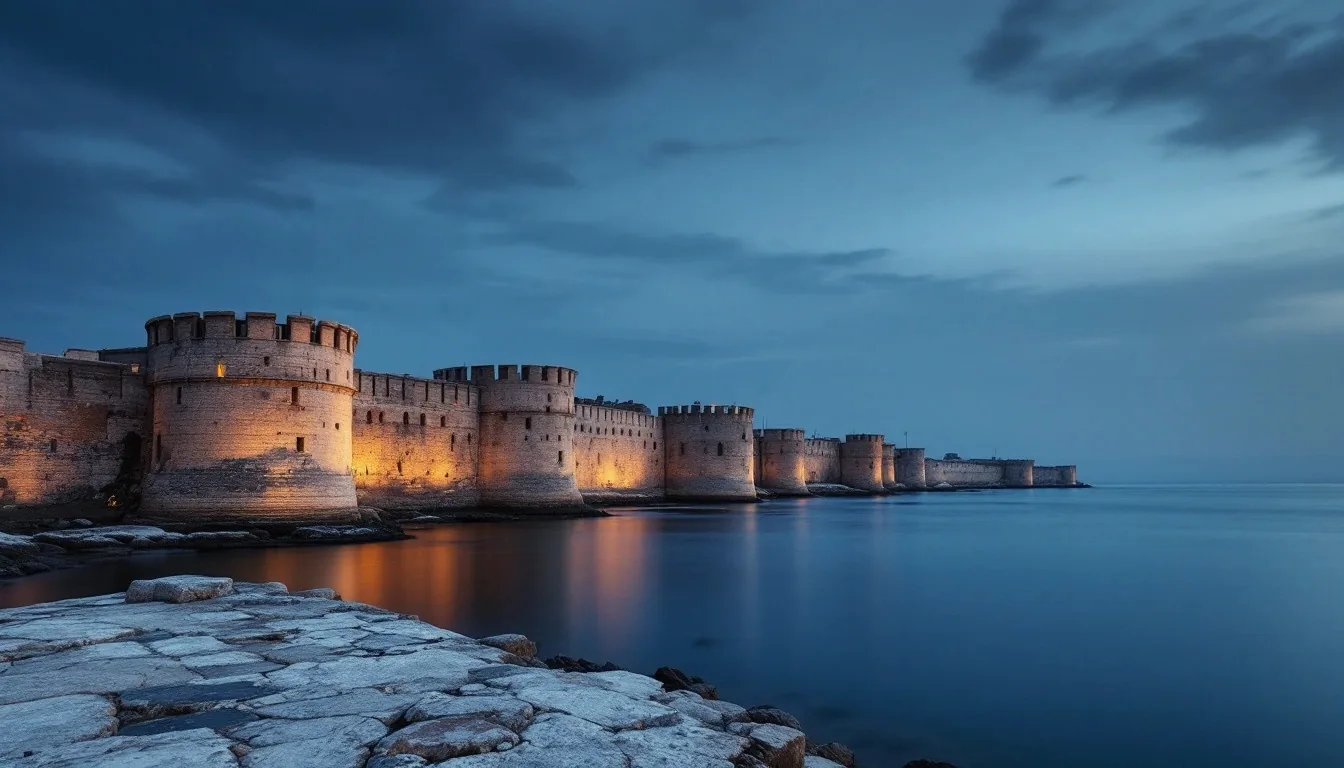
Contents15
- The Eastern Roman Empire at a glance
- Eastern Roman Empire timeline
- Rulers and dynasties of the Eastern Roman Empire
- Famous rulers of the Eastern Roman Empire
- The empire's borders over time
- Founding: Constantine and the division of 395
- Justinian and the height of the empire
- Crisis and revival, 7th-11th centuries
- Decline, the Fourth Crusade and the fall
- How the empire was governed
- The Eastern Roman Empire and its neighbours
- Religion and culture
- The legacy of the Eastern Roman Empire
- Pages in the Rome and Byzantium section
- Verdict: the Eastern Roman Empire in brief
The Eastern Roman Empire was the Roman Empire as it carried on in the east. It was ruled from Constantinople for more than a thousand years. It began as one half of a divided Roman state. It survived long after the Western half fell.
Historians call it the Byzantine Empire. But its rulers and people called themselves Romans until the end. This hub sets out its history, its dynasties and its key emperors. It links every page in the Rome and Byzantium section.
TL;DR: Constantine I opened Constantinople in 330, and the empire was split in 395. The East survived the 400s and peaked under Justinian I (527-565). It lost Syria and Egypt to the Arab conquests in the 600s. It revived under the Macedonian dynasty. It lost Constantinople to the Fourth Crusade in 1204. Restored in 1261, it fell to the Ottomans on 29 May 1453.
The Eastern Roman Empire at a glance
| Field | Record | Status |
|---|---|---|
| Capital | Constantinople (Istanbul), dedicated 11 May 330 | Reviewed |
| Separate eastern court | From January 395, under Arcadius | Reviewed |
| Main dynasties | Theodosian to Palaiologan; about 90 emperors after 395 | Reviewed |
| Languages | Latin at first; Greek in government from the 7th century | Reviewed |
| Religion | Christianity; Eastern Orthodox | Reviewed |
| End | 29 May 1453, Ottoman conquest | Reviewed |
| Modern name | "Byzantine Empire", a later label | Disputed |
Scroll for more →
The empire's own name
"Eastern Roman" or "Byzantine".
Status: Disputed Two names for the same state.
Note: The empire's people called themselves Rhomaioi, Romans. They called their state the Empire of the Romans. The name "Byzantine" comes from Byzantium, the old Greek city on the site of Constantinople.
The scholar Hieronymus Wolf made it popular in 1557, a century after the empire fell. A study in a Cambridge journal looks at imperial writing from the 600s. It shows the rulers still saw themselves as Roman. This site uses both names.
Sources: Cambridge University Press, "Did the Byzantines call themselves Byzantines", Byzantine and Modern Greek Studies; Lumen Learning, "Naming of the Byzantine Empire".
Eastern Roman Empire timeline
| Year | Event |
|---|---|
| 330 | Constantine I dedicates Constantinople |
| 395 | Theodosius I dies; the empire is divided between his sons |
| 413 | The Theodosian land walls of Constantinople are begun |
| 476-480 | The Western line of emperors ends |
| 527-565 | Reign of Justinian I; reconquests in the West; Hagia Sophia rebuilt |
| 610-641 | Heraclius defeats Persia, then loses Syria and Egypt to the Arab conquests |
| 717-718 | The Arab siege of Constantinople fails |
| 867-1056 | The Macedonian dynasty; revival under Basil II |
| 1054 | Formal split between the churches of Rome and Constantinople |
| 1071 | Defeat by the Seljuk Turks at Manzikert |
| 1081-1185 | The Komnenian restoration |
| 1204 | The Fourth Crusade sacks Constantinople |
| 1261 | Michael VIII Palaiologos retakes the city |
| 1453 | The Ottomans take Constantinople on 29 May |
Scroll for more →
Rulers and dynasties of the Eastern Roman Empire
| Dynasty | Years | Key emperors |
|---|---|---|
| Theodosian | 395-457 | Arcadius, Theodosius II |
| Leonid | 457-518 | Leo I, Zeno, Anastasius I |
| Justinian | 518-602 | Justinian I |
| Heraclian | 610-711 | Heraclius |
| Isaurian (Syrian) | 717-802 | Leo III, Constantine V, Irene |
| Amorian | 820-867 | Theophilos |
| Macedonian | 867-1056 | Basil I, Basil II |
| Doukas | 1059-1078 | Constantine X |
| Komnenos | 1081-1185 | Alexios I, Manuel I |
| Angelos | 1185-1204 | Isaac II |
| Laskaris (in exile at Nicaea) | 1204-1261 | John III Vatatzes |
| Palaiologos | 1259-1453 | Michael VIII, Constantine XI |
Scroll for more →
For every emperor by name, see Byzantine Empire. The dynasties are compared on the Roman dynasty page.
Famous rulers of the Eastern Roman Empire
| Emperor | Reign | Known for |
|---|---|---|
| Constantine I | 306-337 (sole ruler from 324) | Founded Constantinople; first Christian emperor |
| Theodosius II | 408-450 | The land walls of Constantinople; the Theodosian Code |
| Justinian I | 527-565 | Reconquests in the West; law code; Hagia Sophia |
| Heraclius | 610-641 | Victory over Persia; the Arab conquests begin |
| Leo III | 717-741 | Held Constantinople against the Arab siege; began iconoclasm |
| Basil II | 976-1025 | Conquered Bulgaria; the medieval empire's peak |
| Alexios I Komnenos | 1081-1118 | Restored the empire after Manzikert; the First Crusade |
| Michael VIII Palaiologos | 1259-1282 | Retook Constantinople in 1261 |
| Constantine XI | 1449-1453 | Last emperor; died defending the city |
Scroll for more →
The empire's borders over time
| Around | Territory held |
|---|---|
| 565 | The Balkans, Anatolia, Syria, Egypt, North Africa, Italy and southern Spain |
| 700 | Anatolia, parts of the Balkans, Sicily and southern Italy |
| 1025 | Anatolia, the Balkans up to the Danube, southern Italy |
| 1200 | Western Anatolia and much of the southern Balkans |
| 1400 | Constantinople, parts of Greece and a few islands |
Scroll for more →
The empire's size changed a great deal. After Justinian's wars it ruled much of the Mediterranean. The Arab conquests of the 600s cut it down to Anatolia and the Balkans. Basil II's campaigns made it a regional great power again. By 1400 it was little more than a city-state.
Founding: Constantine and the division of 395
Constantine I refounded the old Greek city of Byzantium as Constantinople. He opened it on 11 May 330. He gave it a senate and public buildings to match Rome.
Theodosius I died in 395. His sons Arcadius and Honorius took the eastern and western courts. The two halves were never again joined under one ruler.
The East survived the crisis of the 400s that destroyed the West. It had richer provinces and the strong walls of Constantinople. It could also buy off invaders or send them elsewhere. For its early centuries, see Roman Empire of the East. To see how the West ended, read when did the Western Roman Empire fall.
Justinian and the height of the empire
Justinian I ruled from 527 to 565. His armies took back North Africa from the Vandals and Italy from the Ostrogoths. They also took a strip of southern Spain.
He had Roman law gathered into one code, later called the Corpus Juris Civilis. It shaped European law for centuries. He rebuilt Hagia Sophia, finished in 537. It is still one of the world's great buildings.
Crisis and revival, 7th-11th centuries
In the 600s the empire nearly fell. Heraclius beat Persia in 628. But the Arab conquests soon took Syria, Palestine and Egypt.
The empire became smaller and Greek-speaking. It survived Arab sieges of Constantinople, and from the 800s it recovered. Under the Macedonian dynasty it grew again. Basil II (976-1025) took over Bulgaria in 1018.
Decline, the Fourth Crusade and the fall
After 1025 the empire weakened. Defeat by the Seljuk Turks at Manzikert in 1071 cost it much of Anatolia. Alexios I Komnenos asked the West for help, which fed into the First Crusade.
In 1204 the Fourth Crusade, turned from its first goal, sacked Constantinople. It set up a Latin Empire. Byzantine rulers carried on at Nicaea and took the city back in 1261.
The restored empire was small, and it faced the rising Ottoman state. On 29 May 1453, Sultan Mehmed II's army broke through the walls of Constantinople. The last emperor, Constantine XI, died in the fighting. Many historians treat 1453 as the end of the Middle Ages.
How the empire was governed
The emperor held supreme power, advised by officials in the Great Palace of Constantinople. From the 600s the provinces were reorganised into military districts called themes. A general ran each one.
A trained civil service collected taxes and managed a stable gold currency. The people of Constantinople, the army and the palace could all make or break emperors. Many emperors lost their thrones by force.
The Eastern Roman Empire and its neighbours
For most of its history the empire was surrounded by strong rivals. Sasanian Persia was its great enemy until the 620s. The Arab caliphates then took its southern provinces and besieged its capital. Bulgarians, Rus, Normans and Venetians fought or traded with it in the middle centuries.
Finally the Seljuk and Ottoman Turks took Anatolia and the Balkans. The empire survived so long partly through skilled diplomacy. It paid tribute, arranged marriages and set its enemies against one another.
Religion and culture
The Eastern Roman Empire was a Christian state, with close ties between emperor and church. Disputes over belief were matters of state. So was iconoclasm, the fight over religious images.
The churches of Rome and Constantinople drifted apart and formally split in 1054. The empire spread Orthodox Christianity to the Balkans and to Kievan Rus. Its scholars kept much of ancient Greek writing alive.
The legacy of the Eastern Roman Empire
The Eastern Roman Empire left a lasting mark. Justinian's code carried Roman law into the legal systems of Europe. Byzantine scholars kept Greek writing alive and brought it to Italy, feeding the Renaissance.
Byzantine missionaries spread Orthodox Christianity. It shaped the Balkans, Ukraine and Russia. Russian rulers later took the title tsar and called Moscow the "Third Rome". Its mosaics, icons and domed churches still shape Orthodox tradition.
Pages in the Rome and Byzantium section
The empires
- Roman Empire: 27 BCE to 1453
- Byzantine Empire: every emperor from 395 to 1453
- Roman Empire of the East: 395-641
- Holy Roman Empire: the Western successor, 800/962-1806
- Sacred Roman Empire: where the name came from
Emperors and dynasties
- Emperors of Rome: the complete list to 476-480
- Who is the first Roman emperor: Augustus
- Roman dynasty: every imperial dynasty
- Tiberius, Caligula and Claudius
- Holy Roman emperor: the list from Charlemagne to Francis II
- Charles V, Holy Roman emperor
Decline and fall
- Decline of the Roman Empire: causes and debates
- When did the Western Roman Empire fall: 476 or 480
For kings and queens of other lands, start at the lists of monarchs index.
To read more, try our guide to the best Roman history books. It picks seven. Together they cover Rome from the Republic to 1453.
Verdict: the Eastern Roman Empire in brief
The Eastern Roman Empire was ruled from Constantinople until 29 May 1453. It began in 330, or in 395. It outlived the Western empire by almost a thousand years. It reached its height under Justinian I and survived the Arab conquests.
It revived under the Macedonians. After the damage done by the Fourth Crusade, it fell to the Ottomans. Its people called themselves Romans. So this site treats "Byzantine" as a later, disputed label. It was not the empire's own name.
Sources checked for this page
- Britannica, "Byzantine Empire: The 6th century, from East Rome to Byzantium"
- Britannica, "Byzantine Empire: Byzantine decline, 1025-1260"
- Britannica, "Constantine XI Palaeologus"
- World History Encyclopedia, "Byzantine Empire"
- History.com, "Byzantine Empire"
- Oxford Academic, "The New Roman Empire: A History of Byzantium"
- De Imperatoribus Romanis
Our picks in this topic
7 picks
7 Best Roman History Books, From the Republic to Byzantium, in 2026
Seven Roman history books that cover Rome from its founding to the fall of Constantinople: Mary Beard, Tom Holland, Suetonius, Chris Scarre and Anthony Kaldellis, with the author, publisher and scope of each edition.
Questions people also ask
What is the difference between the Roman Empire and the Eastern Roman Empire?
The Eastern Roman Empire is the eastern half of the Roman Empire, ruled from Constantinople after the division of 395. When the Western half ended in 476-480, the Eastern half continued until 1453.
Why is it also called the Byzantine Empire?
Historians named it after Byzantium, the old Greek name of Constantinople. The name was popularised after the empire ended; its own people called it the Empire of the Romans.
How did the Eastern Roman Empire end?
Ottoman forces under Sultan Mehmed II captured Constantinople on 29 May 1453 after a siege of nearly two months. The last emperor, Constantine XI, died in the fighting.
Who was the first emperor of the Eastern Roman Empire?
Arcadius is usually counted as the first emperor of the separate Eastern court, from 395. Some lists begin with Constantine I, who dedicated Constantinople in 330.
How long did the Eastern Roman Empire last?
From the division of 395 to 1453 is 1,058 years; from the dedication of Constantinople in 330 it is 1,123 years. Either way it outlasted the Western empire by nearly a thousand years.
What was the capital of the Eastern Roman Empire?
Constantinople, now Istanbul in Turkey. Constantine I dedicated it in 330 on the site of the older Greek city of Byzantium.