
Emperor Titus: Jerusalem, Vesuvius and the Colosseum
Emperor Titus ruled from 79 to 81 CE. His siege of Jerusalem, response to disasters, opening of the Colosseum, death and memorial arch.
Last updated October 2026
Contents10
Emperor Titus ruled Rome from 79 to 81 CE, succeeding his father Vespasian. He led the capture of Jerusalem in 70. As emperor, he opened the Colosseum and faced major disasters. De Imperatoribus Romanis: Titus
Titus's warm reputation in Roman writing sits beside his brutal role in war. Both are part of his life. The Eastern Roman Empire overview follows the broader history of the state he ruled.
TL;DR: Titus was Vespasian's elder son, general and chosen heir. He led the siege of Jerusalem before becoming emperor. Once on the throne, he offered relief after Vesuvius erupted and after a fire at Rome. He opened the Colosseum and died after a short reign. His brother Domitian succeeded him. Stories that Domitian caused his death remain disputed.
Emperor Titus at a glance
The entries follow De Imperatoribus Romanis.
| Field | Record | Status |
|---|---|---|
| Full name | Titus Flavius Vespasianus | Reviewed |
| Born | 30 December 39 CE, Rome | Reviewed |
| Father | Vespasian | Reviewed |
| Jerusalem | Commands its capture in 70 CE | Reviewed |
| Reign | 79-81 CE | Reviewed |
| Colosseum opening | 80 CE | Reviewed |
| Death | 13 September 81 CE | Reviewed |
| Domitian poisoned him | Conflicting ancient stories, not proved | Disputed |
Scroll for more →
A palace education and an army career
Titus grew up while his father's career improved. He was educated at Claudius's court with Britannicus, the emperor's son. This gave him training and links far above those of Vespasian's own childhood. It placed the younger Flavian near the ruling house before his family held the throne. De Imperatoribus Romanis
His early army service took him to Germany and Britain. Later writers embellished those years with heroic stories. De Imperatoribus Romanis warns that some tales lack a sound historical basis. A useful biography can note his army service without turning every story into fact.
His marriages also linked him with the elite. He had a daughter, Julia. The sources are less clear about which marriage produced her. Leaving that point open is better than forcing a tidy family tree from conflicting accounts.
Titus in the Jewish war
Nero sent Vespasian to suppress the revolt in Judaea. Titus served under his father as a legion commander. He gained real field experience in a campaign of sieges and assaults. The war set the stage for the family's later imperial image. De Imperatoribus Romanis
When Vespasian claimed the throne, Titus took charge of the final campaign. In 70 he besieged Jerusalem. The city fell, and the Temple was destroyed.
Rome's army won. The city's people and Jewish worship suffered a great loss.
Josephus supplies the main surviving narrative of the siege. He wrote under Flavian patronage. So his account must be read with that relationship in mind.
Some texts say Titus wanted to save the Temple. These claims do not prove his wishes.
The sources also describe harsh treatment of prisoners after the capture. A friendly portrait of Titus as emperor cannot erase that earlier record. His career shows how Roman praise of a successful general could rest on suffering in a conquered land.
From victorious son to chosen successor
Father and son celebrated the victory in Rome. It helped present the new dynasty as successful and favoured by the gods. Vespasian had won a civil war. The Judaean triumph gave his family a public victory over a foreign revolt as well. De Imperatoribus Romanis
Titus then served as prefect of the Praetorian Guard. That office made him a powerful partner in rule, with direct access to the force protecting the emperor. He helped act against suspected opponents. Before his accession, some Romans feared he might become another Nero.
His relationship with Berenice, a queen from the eastern Mediterranean, added to elite unease. Roman audiences were suspicious of a ruler linked to a foreign queen. After becoming emperor, Titus sent her away. The choice placed political security above the relationship.
For his father's work in preparing this succession, see Vespasian. The transfer of power mattered as much as the length of the new reign.
Emperor Titus and the disasters of 79-80
Vesuvius erupted in 79, destroying Pompeii and damaging the region around the Bay of Naples. Titus named men to organise relief and used funds from estates without heirs to help survivors. His response became part of the favourable memory of his reign. De Imperatoribus Romanis
A major fire struck Rome in 80. Disease added to the crisis. Titus again offered aid and took a visible role in recovery.
These events gave a short reign an unusual number of tests. An emperor's duty included food, order and repair as well as war.
Relief could not reverse the loss of towns, homes or lives. The sources focus on the ruler's actions. But a reader should keep the scale of the victims' experience in view. A good imperial response is not the same thing as a quick return to normal life.
The fame of the eruption can also distort the order of events. Titus did not become emperor because of Vesuvius. He succeeded Vespasian, and the eruption came after his accession.
The Colosseum opening in 80
Titus dedicated the Flavian Amphitheatre, now called the Colosseum, in 80. The building had begun under Vespasian. Its opening offered large public spectacles and made the dynasty's building programme visible to a wide audience. De Imperatoribus Romanis
Ancient writers describe extended games and many deaths in the arena. Exact totals are harder to assess than the fact of the dedication. The building served as a public gift, an image of imperial power and a setting for violent entertainment. All of those roles belong in its history.
Titus also built baths nearby. Together, the works helped turn land associated with Nero's private palace into public facilities. His brother Domitian continued the family's changes to Rome.
The Arch of Titus
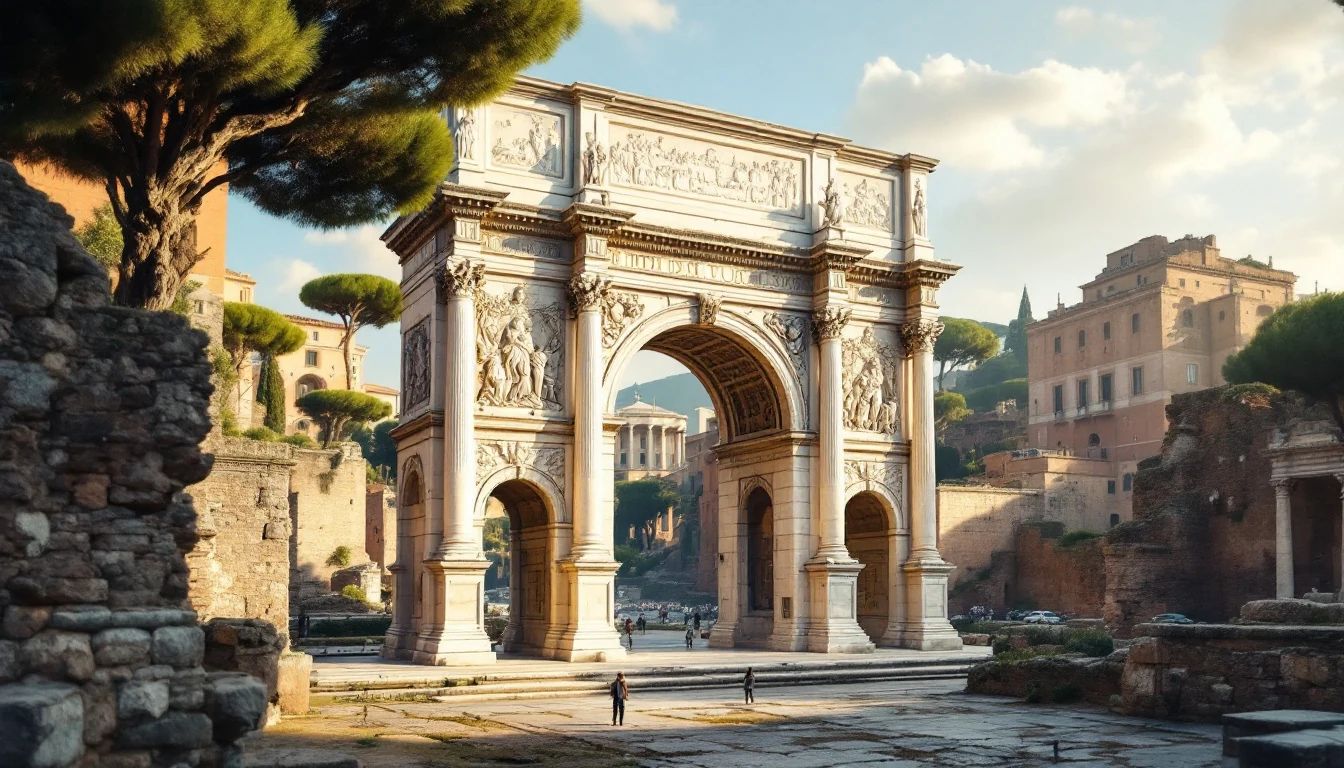
The Arch of Titus honours the victory in Judaea. Reliefs show spoils from the Temple, including the menorah. The arch was dedicated after Titus died, as its inscription makes clear. It is a memorial to him, rather than a project he opened during his reign. De Imperatoribus Romanis
Its imagery gives a different kind of evidence from a biography. It shows how the Flavian government wanted a victory remembered. It records the victors' view of the conquered people. Reading the monument beside Josephus helps expose that difference in viewpoint.
Timeline of Titus's life
The entries follow De Imperatoribus Romanis.
| Date | Event | Place in his career |
|---|---|---|
| 39 CE | Born in Rome | Vespasian's elder son |
| 60s | Army service and early public career | Preparation for command |
| 66-67 | Joins the Judaean campaign | Serves under his father |
| 70 | Captures Jerusalem | Major military victory |
| 79 | Succeeds Vespasian | Becomes emperor |
| 79 | Vesuvius erupts | Relief becomes an urgent task |
| 80 | Opens the Colosseum; fire strikes Rome | Public building and recovery |
| 81 | Dies | Domitian succeeds |
Scroll for more →
Death and the disputed role of Domitian
Titus died on 13 September 81 after about two years in power. He fell ill while travelling to the Sabine country. Domitian succeeded him and arranged honours for the dead ruler. De Imperatoribus Romanis
Domitian caused Titus's death
Status: Disputed
Ancient accounts give different versions, including neglect, poisoning and other acts. Their contradictions prevent a firm conclusion that Domitian murdered him. A brother's gain from a death is not enough to prove guilt. Source: De Imperatoribus Romanis
Some ancient praise may have grown because Titus died so soon. He never had to face the long strain of rule that changed other emperors' reputations. His relief work is still a sound reason for a favourable assessment.
His conduct in Judaea needs its own judgment. For the full sequence, see emperors of Rome.
Verdict: Emperor Titus
Emperor Titus joined a harsh military career with a short reign remembered for generosity and relief. He completed his father's arena and kept the Flavian succession intact. His early death left a warm Roman memory. The siege of Jerusalem gives that memory a necessary second view. De Imperatoribus Romanis
Sources checked for this page
Questions people also ask
When did Titus rule?
Titus ruled from 79 to 81 CE. He succeeded his father Vespasian and was followed by his younger brother Domitian. The succession kept the throne within the Flavian family.
Did Titus destroy Jerusalem?
He commanded the Roman siege and capture in 70. The Temple was destroyed during the capture. Josephus gives the main surviving account, but wrote under Flavian patronage and cannot be treated as neutral about Titus's wishes.
Was Titus emperor when Vesuvius erupted?
Yes. The eruption came in 79 after he succeeded Vespasian. He appointed officials to organise relief and supplied funds for survivors. That response helped shape his favourable reputation as emperor.
Who opened the Colosseum?
Titus dedicated it in 80. Vespasian had begun the building, and Domitian later added works. Its formal name was the Flavian Amphitheatre, linking it to the ruling family.
Did Domitian poison Titus?
That is not proved. Ancient accounts disagree over how Domitian might have been involved. The firm facts are Titus's illness, death in 81 and his brother's succession. The murder stories remain disputed.
Was the Arch of Titus built in his reign?
The surviving arch was dedicated after his death. Its inscription and reliefs honour him and the Judaean victory. It is a memorial to the emperor, rather than an arena-like project he opened himself.