
Emperor Vespasian: Civil War, the Flavians and the Colosseum
Emperor Vespasian ruled from 69 to 79 CE. How a general won the civil war, restored state finances, founded the Flavians and began the Colosseum.
Last updated October 2026
Contents10
- Emperor Vespasian at a glance
- From the Sabine country to public office
- A general in Britain and Judaea
- Winning the Year of the Four Emperors
- Making a new dynasty legitimate
- Finances, taxes and the cost of recovery
- Vespasian and the Colosseum
- Timeline of Vespasian's rise and reign
- Peace, opponents and death
- Verdict: Emperor Vespasian
Emperor Vespasian ruled from 69 to 79 CE. He won the Year of the Four Emperors and founded the Flavian dynasty. He restored stable rule after civil war and began the Colosseum, which his son Titus opened. De Imperatoribus Romanis: Vespasian
His rise showed that a ruler did not have to come from Augustus's family. A general with enough army support could gain the same powers. The Eastern Roman Empire overview follows the state's longer history.
TL;DR: Vespasian rose through public office and army commands. Nero sent him to crush the revolt in Judaea. After Nero's death, his allies and armies helped him win power. As emperor he rebuilt Rome, raised revenue and made his sons the next rulers. He died from illness, leaving Titus a settled succession rather than another open civil war.
Emperor Vespasian at a glance
The entries follow De Imperatoribus Romanis.
| Field | Record | Status |
|---|---|---|
| Full name | Titus Flavius Vespasianus | Reviewed |
| Born | 17 November 9 CE, Falacrina | Reviewed |
| Reign | 69-79 CE | Reviewed |
| Dynasty | Flavian | Reviewed |
| Major project | The Flavian Amphitheatre, later called the Colosseum | Reviewed |
| Sons | Titus and Domitian | Reviewed |
| Death | 23 June 79 CE, from illness | Reviewed |
Scroll for more →
From the Sabine country to public office
Vespasian came from the Sabine region of Italy. His family had money and equestrian status, the rank below the senatorial elite. It was not a poor family without links. It was also not one of the great houses that had long supplied Rome's rulers. De Imperatoribus Romanis
He followed his elder brother into a senatorial career. Army service and public offices gave him the standing needed for higher command. He married Flavia Domitilla and had two sons, Titus and Domitian, as well as a daughter. His wife died before he became emperor.
Antonia Caenis was another important person in his life. She had worked in the household of Claudius's mother and helped connect Vespasian with powerful figures. The career of a Roman general depended on patrons as well as skill. A single account that makes him rise through talent alone leaves those links out.
A general in Britain and Judaea
Under Claudius, Vespasian commanded a legion in the invasion of Britain in 43. Success there brought honours and helped his political career. He later became consul and ruled Africa. These posts made him an experienced member of the governing class. De Imperatoribus Romanis
Nero gave him the command against the revolt in Judaea. Vespasian worked through Galilee and prepared to isolate Jerusalem. His son Titus served with him. World History Encyclopedia: Vespasian: The Commoner Who Became Roman Emperor
Their campaign was brutal. Towns and people resisted Roman rule and paid a heavy price.
The death of Nero changed the task. Vespasian had an army in the east while the throne passed between rivals in Rome. He first acknowledged the new rulers. He then decided to make his own claim.
Winning the Year of the Four Emperors
The Year of the Four Emperors was 69 CE. Galba, Otho and Vitellius held power before Vespasian emerged as the winner. Each change of ruler drew on a different military base. De Imperatoribus Romanis
The Senate could grant titles. But it could not make an unsupported ruler safe.
Vespasian's key ally was Mucianus, governor of Syria. Tiberius Julius Alexander, prefect of Egypt, also backed him. Egyptian troops swore loyalty on 1 July.
Egypt gave his allies soldiers and access to grain. Rome depended on that food supply.
Vespasian stayed in the east while allies carried the war into Italy. The Danube armies moved before Mucianus reached the battlefield. They defeated Vitellius's forces near Cremona and later took Rome. Vespasian did not personally lead the final attack on the capital.
The victory was costly. Fighting destroyed buildings and killed Romans on both sides. Vespasian's brother Sabinus died in the struggle. The new emperor received a capital that needed repair and a political order that needed trust. World History Encyclopedia
Making a new dynasty legitimate
Vespasian received the usual powers of an emperor. A surviving law, the lex de imperio Vespasiani, sets out powers and privileges granted to him. Scholars debate whether it was unusual or simply a rare survivor of a normal process. De Imperatoribus Romanis
He also used known Roman honours and sacred claims to make his rule look lawful. Building a temple to the deified Claudius linked him to a respected earlier ruler. It helped separate the new regime from Nero without rejecting the whole imperial tradition.
His family was part of that message. Titus became his close partner in rule. At the same time, Domitian held honours as the younger son.
The new house offered a clear succession. Vespasian made no secret of wanting his sons to inherit. The Roman dynasty page compares this family with the others.
Finances, taxes and the cost of recovery
Rebuilding and restoring the army needed money. Vespasian raised provincial taxes and withdrew some exemptions. Ancient writers often made his search for revenue a joke about greed. Yet they also credited him with spending on public needs. De Imperatoribus Romanis
The famous urine-tax story belongs to that tradition. Urine was useful in trades such as cleaning cloth. A tax on its collection or sale could thus raise real revenue. World History Encyclopedia
Suetonius passes down the joke. It is an anecdote, not a record of a private talk.
He gave support to cities and helped men meet the property level needed for Senate membership. He also paid teachers of Greek and Latin rhetoric. These acts show that his government was not only about cutting costs. It used revenue to rebuild the state and its elite.
Raising money after civil war can be useful and unpopular at once. A restored treasury mattered to officials and soldiers. The taxpayers who supplied it did not all gain equally from the new peace.
Vespasian and the Colosseum
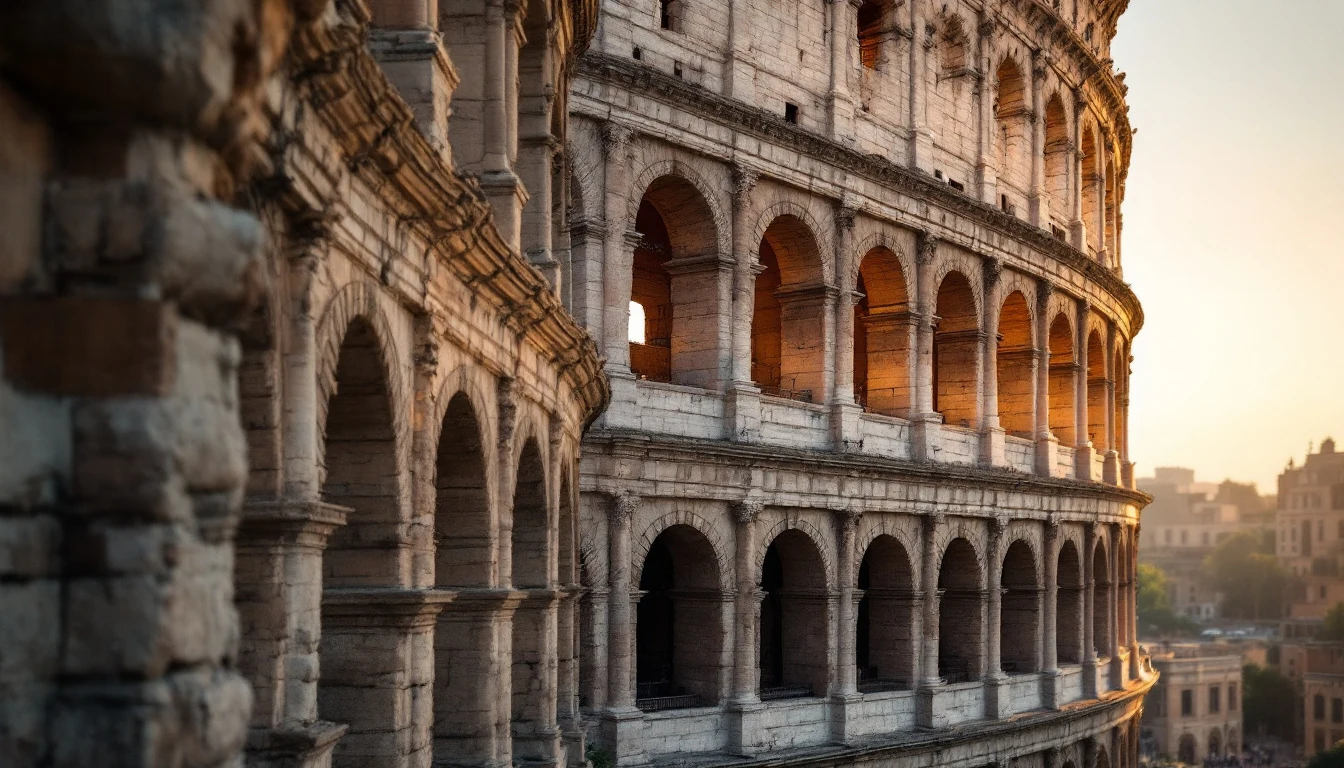
Vespasian began the Flavian Amphitheatre on the site of the lake in Nero's palace grounds. A place associated with the emperor's private luxury became a venue for public shows. The building sent a clear message about the new family's priorities. De Imperatoribus Romanis
World History Encyclopedia dates the start to 72. Vespasian did not live to see the finished arena opened. Titus completed that step in 80. Domitian later added to the building and to the family's wider construction programme. World History Encyclopedia
The arena was public. But its shows were also violent. Animals and people died for entertainment.
Calling it a gift to Rome describes the political purpose. It does not remove the human cost of the spectacle.
Timeline of Vespasian's rise and reign
The entries follow De Imperatoribus Romanis, World History Encyclopedia.
| Date | Event |
|---|---|
| 9 CE | Born in the Sabine country |
| 43 | Commands a legion in Britain |
| 51 | Reaches the consulship |
| 66-67 | Receives and begins the Judaean command |
| 69 | His coalition wins the civil war |
| 70 | Arrives in Rome as emperor |
| 72 | Work begins on the Colosseum |
| 79 | Dies; Titus succeeds |
Scroll for more →
Peace, opponents and death
Vespasian's reign was far more settled than the civil war before it. That does not mean it was free of coercion. Helvidius Priscus, a critic who defended the Senate's independence, was exiled and later executed. Titus helped suppress threats to the new dynasty. De Imperatoribus Romanis
The emperor died from illness on 23 June 79 in the Sabine country. Ancient writers preserve deathbed jokes, including one about becoming a god. They fit his remembered wit. But their wording cannot be checked like an official record.
Titus succeeded him without another struggle between provincial armies. That orderly transfer was one of Vespasian's strongest achievements. For the complete sequence, see emperors of Rome.
Verdict: Emperor Vespasian
Emperor Vespasian joined success in war with careful use of Roman offices and family succession. He repaired a state damaged by civil war and funded lasting public buildings. His rule could be harsh. De Imperatoribus Romanis
But it gave Rome a stable court and a clear heir. The Colosseum remains the best-known part of a much wider recovery.
Sources checked for this page
- De Imperatoribus Romanis: Vespasian
- Vespasian: The Commoner Who Became Roman Emperor - World History Encyclopedia
Questions people also ask
When did Vespasian rule?
Vespasian ruled from 69 to 79 CE. His armies and allies defeated Vitellius in the civil war. He arrived in Rome after his claim had been accepted and founded the Flavian dynasty.
Did Vespasian build the Colosseum?
He began it, on the site of Nero's palace lake. He died before it opened. Titus completed and dedicated the arena in 80, and Domitian later added further works.
Was Vespasian at the fall of Jerusalem?
He began the campaign against the Judaean revolt but left its final stage to Titus after making his bid for the throne. Titus commanded the siege and capture of Jerusalem in 70.
Why did Vespasian raise taxes?
He needed revenue for an army and state damaged by civil war, as well as for rebuilding. He raised provincial taxes and removed some exemptions. Sources also credit him with support for cities and education.
Who succeeded Vespasian?
His elder son Titus, in 79. Vespasian had already made Titus a close partner in government. After Titus died, the younger son Domitian became emperor, keeping the throne in the Flavian family.
How did Vespasian die?
He died from illness on 23 June 79 in the Sabine country near his birthplace. His peaceful death and Titus's succession contrasted with the violent changes of ruler that had brought him to power.