
Roman Emperor Tiberius (14-37 CE): Life, Reign, Sejanus and Capri
Tiberius, the second Roman emperor: his military career under Augustus, his reluctant accession in 14 CE, the rise and fall of Sejanus, his retreat to Capri, the treason trials, and how ancient writers judged him.
Last updated September 2026
Contents16
- Roman emperor Tiberius at a glance
- Tiberius's family
- Early life: the stepson of Augustus
- The general
- Becoming emperor in 14 CE
- Rule in Rome, 14-26 CE
- The empire under Tiberius
- Sejanus and the move to Capri
- The treason trials
- The financial crisis of 33 CE
- Tiberius on Capri
- Death and succession
- Tiberius in the sources
- How historians judge Tiberius today
- Tiberius and the Gospels
- Verdict: Roman emperor Tiberius
Roman emperor Tiberius, the second ruler of the empire, proved that Augustus's system could outlive its founder. He was already 55 when he came to the throne in 14 CE. Before that he had a long career as Rome's leading general. His 23-year reign kept the empire stable and its treasury sound.
But it also saw treason trials and the rise of Sejanus, head of the Guard. And it saw the emperor retreat to Capri. This page sets out his life and reign. It also shows where ancient views of him are disputed.
TL;DR: Tiberius (42 BCE-37 CE) was the son of Livia and the stepson of Augustus. He ruled from 14 to 37 CE. He was a skilled general and a careful ruler who avoided new wars. From 26 CE he stayed away from Rome. His prefect Sejanus grew powerful until Tiberius had him executed in 31. Treason trials darkened his last years. He died at Misenum in 37. Caligula came next.
Roman emperor Tiberius at a glance
| Field | Record | Status |
|---|---|---|
| Full name as emperor | Tiberius Caesar Augustus | Reviewed |
| Born | 16 November 42 BCE, Rome | Reviewed |
| Parents | Tiberius Claudius Nero and Livia Drusilla | Reviewed |
| Adopted by Augustus | 26 June 4 CE | Reviewed |
| Became emperor | After Augustus died on 19 August 14 CE | Reviewed |
| Wives | Vipsania Agrippina; Julia, daughter of Augustus | Reviewed |
| Son | Drusus the Younger (died 23 CE) | Reviewed |
| Died | 16 March 37 CE, Misenum, aged 77 | Reviewed |
| Succeeded by | Caligula, his adoptive grandson | Reviewed |
Scroll for more →
Tiberius's family
| Relative | Relation to Tiberius |
|---|---|
| Livia | Mother; wife of Augustus |
| Augustus | Stepfather and, from 4 CE, adoptive father |
| Drusus the Elder | Younger brother; died in Germany in 9 BCE |
| Germanicus | Nephew and adopted son; died 19 CE |
| Claudius | Nephew; later emperor |
| Drusus the Younger | Son, by Vipsania; died 23 CE |
| Tiberius Gemellus | Grandson; named joint heir in 37 CE |
| Caligula | Grand-nephew and adoptive grandson; his successor |
Scroll for more →
Early life: the stepson of Augustus
Tiberius was born into the Claudian family, one of Rome's oldest noble houses. When he was a small child, his mother Livia divorced his father. In 38 BCE she married Octavian, the future Augustus. Tiberius grew up in the home of the most powerful man in Rome. But he was a stepson, not an heir.
Augustus passed him over again and again. He first favoured his nephew Marcellus, then his friend Agrippa. Then he favoured his grandsons Gaius and Lucius.
Tiberius was made to divorce his wife Vipsania, whom he loved. In 11 BCE he had to marry Augustus's daughter Julia. The marriage was unhappy.
The general
Tiberius was one of the best Roman commanders of his age.
| Years | Campaign or role |
|---|---|
| 20 BCE | Leads the mission to Armenia when Parthia returns captured Roman standards |
| 15 BCE | Conquers Alpine peoples with his brother Drusus |
| 12-9 BCE | Campaigns in Pannonia, along the Danube |
| 9-7 BCE | Commands in Germany after Drusus's death |
| 6 BCE-2 CE | Withdraws to Rhodes in semi-exile |
| 4-6 CE | Campaigns in Germany after his adoption |
| 6-9 CE | Crushes the great Pannonian revolt |
| 10-12 CE | Secures the Rhine after the loss of three legions under Varus in 9 CE |
Scroll for more →
His retreat to Rhodes in 6 BCE puzzled people at the time. Ancient writers gave several reasons. They include his unhappy marriage and his anger at the rise of Augustus's grandsons. After both grandsons died, Augustus adopted Tiberius in 4 CE. That made him the clear heir.
Becoming emperor in 14 CE
Augustus died on 19 August 14 CE. Tiberius already held the key powers of command and of a tribune. So in practice the handover was smooth. But in the Senate he held back from taking the post formally.
He spoke of the burden of rule. Tacitus saw this as hypocrisy. Other historians see real reluctance, or care for the rules. The Senate pressed him, and he accepted.
One of the first acts of the new reign was the killing of Agrippa Postumus in exile. He was Augustus's last surviving grandson. Who ordered it is unclear.
Rule in Rome, 14-26 CE
Tiberius's early reign was careful and businesslike. He avoided new conquests, following Augustus's advice to keep the empire within its borders. He kept provincial governors in post for long terms.
He warned them not to over-tax. He is said to have told one that a good shepherd shears his flock but does not skin it. He spent little on buildings and games. That made him unpopular with the Roman crowd, but it kept the treasury strong.
His adopted son Germanicus won victories in Germany. Then he died in Syria in 19 CE, amid rumours of poison. Tiberius's own son Drusus died in 23 CE. The succession, and power in Rome, began to slip toward Sejanus, the head of the Guard.
The empire under Tiberius
Tiberius kept the frontiers largely where Augustus had left them. But the empire still saw fighting and change.
- Germany: Germanicus campaigned beyond the Rhine from 14 to 16 CE and recovered two of the eagles lost with Varus. Tiberius then recalled him and ended the attempt to conquer the region.
- Cappadocia: the eastern kingdom became a Roman province in 17 CE, and its revenues allowed a cut in a sales tax.
- Africa: the Numidian leader Tacfarinas led a long revolt, from 17 to 24 CE, before Roman forces killed him.
- Gaul: a revolt led by Julius Florus and Julius Sacrovir in 21 CE was put down quickly.
Tiberius chose diplomacy over war where he could. The provinces were mostly peaceful and well run.
Sejanus and the move to Capri
Lucius Aelius Sejanus commanded the Praetorian Guard. He brought its units together in a single camp at Rome. That greatly increased its power.
In 26 CE Tiberius left Rome for Campania. In 27 he settled on the island of Capri. He never entered the city again.
With the emperor away, Sejanus controlled who saw him and what he heard. Agrippina the Elder, Germanicus's widow, was arrested with her two eldest sons. All three later died.
In 31 CE Tiberius's sister-in-law Antonia warned him, and he turned on Sejanus. A letter from Capri was read to the Senate. Sejanus was arrested and executed on 18 October 31.
The death of Drusus
Death of Drusus the Younger, 23 CE.
Status: Disputed Natural death or poison is unproven.
Note: Tiberius's son Drusus died in 23 CE. Eight years later, after Sejanus fell, Sejanus's former wife Apicata made a charge. She said Sejanus and Drusus's wife Livilla had poisoned him.
Tacitus and Cassius Dio report the charge. It came from a bitter source in the middle of a purge. Modern historians treat it as possible but unproven.
Sources: Britannica, "Tiberius"; De Imperatoribus Romanis, "Tiberius".
The treason trials
Tiberius's reign is remembered for trials under the law of maiestas, treason against the Roman people and the emperor. Informers brought charges for words as well as deeds. The trials grew after Sejanus fell, as his friends were hunted down.
Tacitus presents this as a reign of terror. Other historians note that Tiberius sometimes held prosecutions back. The Senate itself drove many of them.
The financial crisis of 33 CE
In 33 CE a credit crisis hit Rome. Strict enforcement of lending laws had left many borrowers unable to pay. Tiberius replied by putting 100 million sesterces through the banks as interest-free loans for three years. The measure ended the panic. It is one of the clearest examples of his practical way of ruling.
Tiberius on Capri
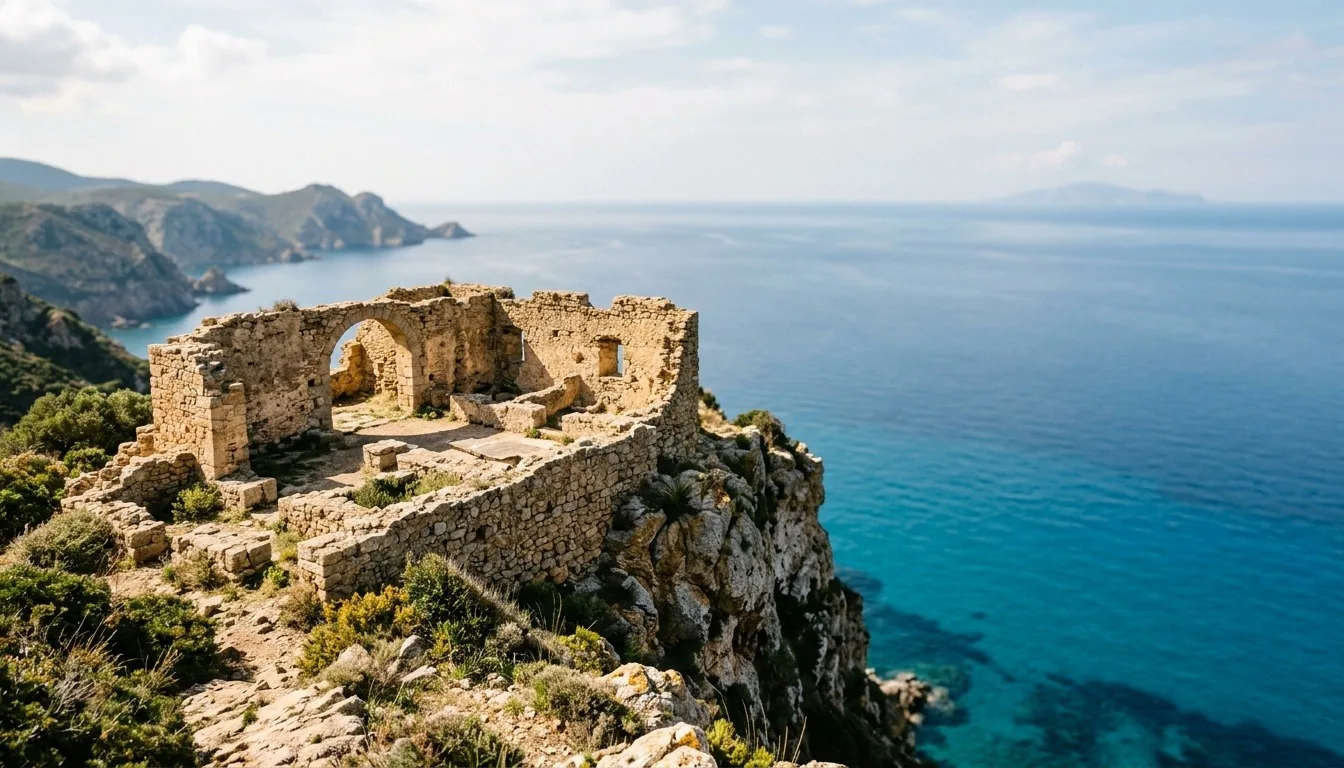
On Capri Tiberius lived in a group of villas. The largest, the Villa Jovis, stands on the island's eastern heights. Its ruins can still be visited.
From there he ruled by letter. He received reports and sent orders to the Senate. The distance between emperor and capital was one reason Sejanus could build so much power.
Death and succession
Tiberius died at Misenum, on the Bay of Naples, on 16 March 37 CE, aged 77. His will named two joint heirs. One was his adopted grandson Gaius, known as Caligula.
The other was his grandson Tiberius Gemellus. The Senate gave sole power to Caligula. His reign is covered on the Caligula page.
Some ancient writers claimed that Caligula or the prefect Macro smothered Tiberius. The story cannot be checked.
Tiberius in the sources
| Writer | When | View of Tiberius |
|---|---|---|
| Velleius Paterculus | Contemporary; served under him | Admiring |
| Tacitus, Annals | Early 2nd century | Deeply hostile; portrays him as a hypocrite who revealed his true nature over time |
| Suetonius | Early 2nd century | Hostile; includes scandalous stories about Capri |
| Cassius Dio | Early 3rd century | Mixed |
Scroll for more →
Suetonius told stories of vice on Capri. Modern historians widely doubt them. They fit a pattern of rumour about rulers who lived out of sight.
How historians judge Tiberius today
Modern historians tend to separate Tiberius's government from his character. On government, the record is strong. He kept peace on most frontiers and ran the provinces honestly. He kept the finances sound. And he managed the first handover of power in the new imperial system.
On character, the picture is darker. He was reserved and suspicious. He often could not work with the Senate he claimed to respect. Much of the debate turns on how far to trust Tacitus. His Annals are the fullest account of the reign, and also the most hostile.
Tiberius and the Gospels
Tiberius is one of the few emperors named in the New Testament. The Gospel of Luke dates the start of John the Baptist's preaching to "the fifteenth year of the reign of Tiberius Caesar". Pontius Pilate governed Judaea under Tiberius, from about 26 to 36 CE. The crucifixion of Jesus took place during his reign.
Suetonius wrote a life of Tiberius in The Twelve Caesars, our pick for the best ancient source. It is one of seven in our guide to the best Roman history books.
Verdict: Roman emperor Tiberius
Roman emperor Tiberius ruled for 23 years, from 14 to 37 CE. He passed on a secure empire and a full treasury. He was a skilled general and a careful ruler.
His name suffers from his retreat to Capri, the rise of Sejanus and the treason trials. It also suffers from Tacitus's powerful hostility. For the emperor before him, see who was the first Roman emperor. For his family line, see Roman dynasty.
The wider story, from Augustus to 1453, is on the Eastern Roman Empire page.
Sources checked for this page
- Britannica, "Tiberius"
- De Imperatoribus Romanis, "Tiberius"
- World History Encyclopedia, "Tiberius"
- The Metropolitan Museum of Art, "The Roman Empire (27 B.C.-393 A.D.)"
- Livius.org, "Tiberius"
- PBS, "The Roman Empire in the First Century: Tiberius"
Questions people also ask
Who was Tiberius?
The second Roman emperor, stepson and adopted son of Augustus. He ruled from 19 August 14 CE to his death on 16 March 37 CE.
Why did Tiberius go to Capri?
He left Rome in 26 CE and settled on the island of Capri in 27, and never returned to the city. Ancient writers suggest he wanted to escape politics, disliked Rome, or was steered away by Sejanus; the true reasons are not known.
Who was Sejanus?
Lucius Aelius Sejanus, commander of the Praetorian Guard, who became the most powerful man in Rome while Tiberius was on Capri. Tiberius turned on him in 31 CE, and he was executed.
How did Tiberius die?
He died at Misenum on 16 March 37 CE, aged 77. Some ancient writers claimed he was smothered to hasten Caligula's accession, but this is not proven.
Was Tiberius a good emperor?
Historians are divided. He kept the empire stable, avoided costly wars and left a large surplus in the treasury. But his withdrawal to Capri, the power he gave Sejanus and the treason trials of his later years damaged his reputation.
How long did Tiberius reign?
About 22 and a half years, from 19 August 14 CE to 16 March 37 CE.
Where is Tiberius buried?
His ashes were placed in the Mausoleum of Augustus in Rome, the tomb of the Julio-Claudian family. Unlike Augustus, he was not declared a god after his death.
What happened to Sejanus?
Tiberius sent a long letter from Capri to the Senate denouncing him. Sejanus was arrested during the Senate meeting and executed on 18 October 31 CE, and many of his family and allies were killed afterwards.