
7 Best Roman History Books in 2026
As an Amazon Associate, this website earns from qualifying purchases.

The short answer
Start with Mary Beard's SPQR. For the emperors, add Holland's Dynasty, Beard's Emperor of Rome and Suetonius. Scarre is the best reference, and Kaldellis carries the story to 1453.
Last updated September 2026
Contents12
- #1. SPQR: best single history of ancient Rome
- #2. Rubicon: best on the fall of the Republic
- #3. Dynasty: best on the first imperial family
- #4. The Twelve Caesars: best ancient source
- #5. Emperor of Rome: best on what emperors actually did
- #6. Chronicle of the Roman Emperors: best reign-by-reign reference
- #7. The New Roman Empire: best on Byzantium
- Factors to consider when choosing Roman history books
- How we picked these Roman history books
- How to read Roman history in order
- Popular or academic: which kind of book to choose
- Verdict: the best Roman history books
Our top 7 picks
- 1Best single history of ancient Rome
 SPQR by Mary Beard
- Rome's first thousand years, to AD 212
- By a Cambridge classicist, for general readers
- Liveright, an imprint of W. W. Norton
- 2Best on the fall of the Republic
 Rubicon by Tom Holland
- The last years of the Roman Republic
- Anchor paperback, 464 pages
- Narrative history for general readers
- 3Best on the Julio-Claudian emperors
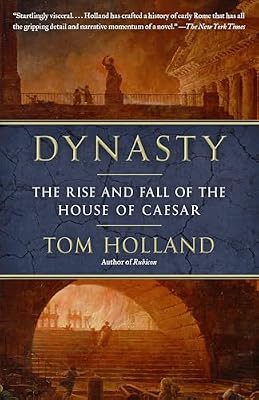 Dynasty by Tom Holland
- The house of Caesar, from Augustus to Nero
- Paperback, 512 pages
- Sequel to Holland's Rubicon
- 4Best ancient source
 The Twelve Caesars by Suetonius (Penguin Classics)
- Ancient lives of Julius Caesar and the first eleven emperors
- Robert Graves's translation, revised by James Rives
- Introduction and notes by James Rives
- 5Best on how emperors ruled
 Emperor of Rome by Mary Beard
- What Roman emperors did, from Julius Caesar to Alexander Severus
- Organised by theme rather than reign
- Liveright, an imprint of W. W. Norton
- 6Best reign-by-reign reference
 Chronicle of the Roman Emperors by Chris Scarre
- Reign-by-reign entries for every Roman emperor
- Thames and Hudson paperback, 240 pages
- 111 colour and 217 black-and-white illustrations
- 7Best on the Eastern Roman Empire
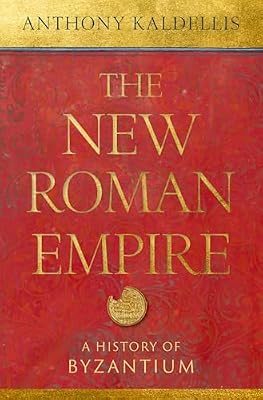 The New Roman Empire by Anthony Kaldellis
- Single-volume history of the Eastern Roman Empire to 1453
- First published by Oxford University Press in 2023; this is the 2026 paperback
- Treats Byzantium as the Roman Empire it called itself
Roman history books cover more than two thousand years. The story runs from the kings and the Republic to the emperors in the West. It ends with the Eastern empire, which lasted until 1453.
This list picks seven books that together cover that span without much overlap. Every pick is by a named historian or ancient author. Each edition matches its publisher's page. The emperors themselves are listed in our Eastern Roman Empire section.
TL;DR: Begin with Mary Beard's SPQR. Add Beard's Emperor of Rome. Read Tom Holland's Rubicon and Dynasty for the fall of the Republic and the first emperors. Read Suetonius for the ancient view. Keep Scarre's Chronicle for reference, and finish with Kaldellis on Byzantium.
#1. SPQR: best single history of ancient Rome
Our verdict:
Best single history of ancient Rome
Best for readers who want Rome from its founding to AD 212 in one book.
View on Amazon- Rome's first thousand years, to AD 212
- By a Cambridge classicist, for general readers
- Liveright, an imprint of W. W. Norton
Keep in mind: it stops in 212, so the later empire needs other books.
Product details checked September 2026
Mary Beard is a Cambridge classicist. She tells the story of Rome's first thousand years and asks how we know it.
W. W. Norton publishes it under its Liveright imprint. The book ends in AD 212. That year Caracalla made almost every free person in the empire a Roman citizen.
#2. Rubicon: best on the fall of the Republic
Our verdict:
Best on the fall of the Republic
Best for readers who want the drama of Caesar, Pompey and the civil wars.
View on Amazon- The last years of the Roman Republic
- Anchor paperback, 464 pages
- Narrative history for general readers
Keep in mind: it ends as the empire begins, so read Dynasty next.
Product details checked September 2026
Tom Holland tells the story of the Roman Republic's last years. He takes it up to the rise of Augustus. The Anchor paperback runs to 464 pages. For why Augustus, not Caesar, counts as the first emperor, see the first Roman emperor page.
#3. Dynasty: best on the first imperial family
Our verdict:
Best on the Julio-Claudian emperors
Best for readers who want Augustus to Nero as one family story.
View on Amazon- The house of Caesar, from Augustus to Nero
- Paperback, 512 pages
- Sequel to Holland's Rubicon
Keep in mind: it covers only the first dynasty, about a century.
Product details checked September 2026
Holland's sequel follows the house of Caesar from Augustus to Nero. The Penguin Random House paperback runs to 512 pages. The family is set out on the Roman dynasty page.
#4. The Twelve Caesars: best ancient source
The Twelve Caesars by Suetonius (Penguin Classics)
Our verdict:
Best ancient source
Best for readers who want to hear from a Roman writer about the first emperors.
View on Amazon- Ancient lives of Julius Caesar and the first eleven emperors
- Robert Graves's translation, revised by James Rives
- Introduction and notes by James Rives
Keep in mind: Suetonius loved gossip, so treat his stories with care.
Product details checked September 2026
Suetonius wrote lives of Julius Caesar and the eleven emperors who followed him, up to Domitian. This Penguin Classics edition uses Robert Graves's translation. James Rives revised and annotated it, says Penguin Random House. Our pages on Caligula and Tiberius show where his stories hold up and where they do not.
#5. Emperor of Rome: best on what emperors actually did
Our verdict:
Best on how emperors ruled
Best for readers who want to know what the job of emperor involved, day to day.
View on Amazon- What Roman emperors did, from Julius Caesar to Alexander Severus
- Organised by theme rather than reign
- Liveright, an imprint of W. W. Norton
Keep in mind: it is organised by theme, not reign, so it is not a timeline.
Product details checked September 2026
Beard's later book looks at emperors from Julius Caesar to Alexander Severus. She follows their work, dinners, palaces and deaths.
W. W. Norton publishes it under the Liveright imprint. It pairs well with the full list on the emperors of Rome page.
#6. Chronicle of the Roman Emperors: best reign-by-reign reference
Chronicle of the Roman Emperors by Chris Scarre
Our verdict:
Best reign-by-reign reference
Best for readers who want a short, illustrated entry for every emperor.
View on Amazon- Reign-by-reign entries for every Roman emperor
- Thames and Hudson paperback, 240 pages
- 111 colour and 217 black-and-white illustrations
Keep in mind: entries are brief and it ends with the West, not Byzantium.
Product details checked September 2026
Chris Scarre wrote this volume in the Thames and Hudson Chronicles series. It gives each emperor a dated entry with portraits and coins. The Thames and Hudson USA paperback runs to 240 pages with 111 colour and 217 black-and-white illustrations.
#7. The New Roman Empire: best on Byzantium
The New Roman Empire by Anthony Kaldellis
Our verdict:
Best on the Eastern Roman Empire
Best for readers who want the empire after Rome's fall in the West, to 1453.
View on Amazon- Single-volume history of the Eastern Roman Empire to 1453
- First published by Oxford University Press in 2023; this is the 2026 paperback
- Treats Byzantium as the Roman Empire it called itself
Keep in mind: it is long and detailed, so it suits readers already hooked.
Product details checked September 2026
Anthony Kaldellis argues that the empire we call Byzantine was simply the Roman Empire. That is what its own people called it. Oxford University Press first published it in 2023. The edition we link is the 2026 paperback. For the dates and the list of rulers, see the Byzantine Empire page.
Factors to consider when choosing Roman history books
- The period you want. Rome's story runs for more than two thousand years. SPQR stops in AD 212. Rubicon and Dynasty cover about a century each. Kaldellis covers the East to 1453.
- Modern history or an ancient source. A modern historian weighs the evidence for you. An ancient writer such as Suetonius gives you the evidence itself, gossip and all. Read a modern book first.
- Narrative or reference. Holland reads like a novel. Scarre's Chronicle is for checking a date or a name.
- The translation. For an ancient author, the translator matters. A good edition names the translator and adds notes. The Penguin Suetonius does both.
- Length and depth. SPQR and Kaldellis are long. If you want a shorter start, begin with Rubicon or with Scarre.
It also helps to know how each author treats the sources. Some writers retell ancient stories as fact. Others stop to ask whether the story can be trusted. Beard and Kaldellis do the second, often. That makes them slower reads, but safer ones.
How we picked these Roman history books
We wanted a shelf that runs from the Republic to 1453. It mixes modern history with one ancient source. It also has a reference book for checking dates. Every pick is by a named author or translator. We matched each edition to its publisher's page, linked in the sources below.
We left out historical novels and books on narrow topics such as a single battle. The order below follows Rome's history rather than a ranking of quality.
How to read Roman history in order
Start with SPQR for the big picture. Then read Rubicon and Dynasty to follow the Republic into the empire. Try Suetonius once you know the cast.
Emperor of Rome works best after that, when the names are familiar. Kaldellis takes you from the later empire to 1453. Scarre's Chronicle sits beside all of them for quick checks.
One caution applies to almost every Roman history book. Dates and numbers from ancient sources are often uncertain. Even the end of the Western empire is debated. Both 476 and 480 have defenders. The fall of the Western Roman Empire page explains the dispute.
Popular or academic: which kind of book to choose
The books above are written for general readers. But they sit at different points between story and scholarship. Holland writes vivid narrative and keeps footnotes light.
Beard and Kaldellis are academics who write for a wide audience. They stop more often to explain the evidence and the arguments. Scarre's Chronicle is a reference book, meant to be dipped into.
If you enjoy one kind, lean towards others like it. Readers who like Holland's pace usually enjoy Rubicon and Dynasty together. Readers who like Beard's habit of questioning the sources tend to prefer Kaldellis on Byzantium.
Verdict: the best Roman history books
For most readers, the best Roman history books are Beard's SPQR for the whole story and Holland's Rubicon and Dynasty for the move from Republic to empire. Add Suetonius for the ancient voice. Add Beard's Emperor of Rome for how rule worked.
Keep Scarre for reference and Kaldellis for the Eastern empire. Together they cover Rome from its founding to 1453. The Eastern Roman Empire section of this site covers the same span, emperor by emperor.
Sources checked for this page
- W. W. Norton, "SPQR" by Mary Beard
- W. W. Norton, "Emperor of Rome" by Mary Beard
- Penguin Random House, "Rubicon" by Tom Holland
- Penguin Random House, "Dynasty" by Tom Holland
- Penguin Random House, "The Twelve Caesars" by Suetonius, translated by Robert Graves
- Thames and Hudson USA, "Chronicle of the Roman Emperors" by Chris Scarre
- Oxford Academic, "The New Roman Empire: A History of Byzantium" by Anthony Kaldellis
Questions people also ask
What is the best Roman history book for beginners?
Mary Beard's SPQR is the usual starting point. It covers Rome from its legendary founding to AD 212 in clear, lively prose, and it explains how historians know what they know.
Which Roman history books cover the emperors?
Beard's Emperor of Rome looks at what emperors actually did. Holland's Dynasty narrates the Julio-Claudians, and Suetonius's Twelve Caesars is the ancient source for Julius Caesar and the first eleven emperors.
Is there a good book on the Eastern Roman Empire?
Anthony Kaldellis's The New Roman Empire, first published by Oxford University Press in 2023, is a single-volume history of the empire from Constantine's era to the fall of Constantinople in 1453.
Should I read Gibbon for Roman history?
Edward Gibbon's Decline and Fall of the Roman Empire, published between 1776 and 1789, is a landmark of English prose, but its judgments are those of the eighteenth century. Read it after a modern survey such as SPQR, as a classic rather than a first guide.
Are these Roman history books suitable for students?
Yes, as background reading. Beard and Kaldellis are academic historians, and the Penguin Suetonius has scholarly notes. For essays, check what your course recommends, since some teachers prefer specialist studies over narrative histories.