
5 Best DNA Tests for Ancestry in 2026
As an Amazon Associate, this website earns from qualifying purchases.
The short answer
AncestryDNA suits most family-tree builders, because its matches link to trees and records. 23andMe gives the most detailed origins report. FamilyTreeDNA suits hands-on researchers. No kit can prove royal descent.
Last updated September 2026
Contents11
- #1. AncestryDNA: best for building a family tree
- #2. AncestryDNA with a 3-month membership: best for starting research straight away
- #3. 23andMe Ancestry Service: best for detailed origins
- #4. 23andMe Health + Ancestry: best if you also want health reports
- #5. FamilyTreeDNA Family Finder: best for hands-on researchers
- Factors to consider when choosing a DNA test for ancestry
- Can a DNA test prove royal descent?
- How royal identities have been proved with DNA
- Which DNA test should you buy?
- How we picked these DNA tests
- Verdict: the best DNA test for ancestry
Our top 5 picks
- 1Best for building a family tree
 AncestryDNA Genetic Ethnicity Test
- Saliva test; the maker says results arrive online in roughly six weeks
- Origins estimate covers more than 3,600 regions, per the maker
- SideView splits origins and matches by parental side
- 2Best for starting research straight away
 AncestryDNA Test + 3-Month World Explorer Membership
- The same AncestryDNA saliva test as the standalone kit
- Adds three months of Ancestry's World Explorer records membership
- Membership is redeemed during activation by the person taking the test
- 3Best for detailed origins
 23andMe Ancestry Service
- Saliva test; the maker says reports take about four to five weeks
- Ancestry estimate across more than 4,500 regions, per the maker
- Includes maternal and paternal line reports and 30+ trait reports
- 4Best if you also want health reports
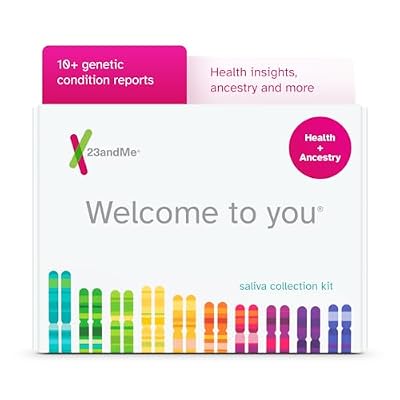 23andMe Health + Ancestry Service
- Everything in the 23andMe ancestry service
- Adds FDA-authorized health predisposition and carrier status reports
- Saliva test with results in about four to five weeks, per the maker
- 5Best for hands-on researchers
 FamilyTreeDNA Family Finder
- Autosomal test for finding relatives on both sides of the family
- Includes a chromosome browser to compare shared DNA segments
- Cheek-swab kit processed in the company's own lab
The best DNA test for ancestry is the one that answers your question. Some kits are best at finding living cousins. Some are best at estimating where your ancestors came from. Others trace one line back through fathers or mothers.
This guide compares three kits and two bundles sold on Amazon. It explains their privacy records. It also says plainly what no kit can do: prove that you descend from a king or queen. This page belongs to our monarchy guide, which explains how royal houses pass the crown.
TL;DR: AncestryDNA is the best DNA test for ancestry for most family-tree builders. Its matches link to family trees and records. 23andMe gives the most detailed origins report, but it changed owners in 2025 after a breach and a bankruptcy. FamilyTreeDNA suits hands-on researchers. None of them can prove royal descent. That takes documents, not saliva.
#1. AncestryDNA: best for building a family tree
AncestryDNA Genetic Ethnicity Test
Our verdict:
Best for building a family tree
Best for anyone who wants to find relatives and turn matches into a documented family tree.
View on Amazon- Saliva test; the maker says results arrive online in roughly six weeks
- Origins estimate covers more than 3,600 regions, per the maker
- SideView splits origins and matches by parental side
- Family trees and record collections need a paid Ancestry subscription
Keep in mind: several features need a paid Ancestry subscription, and results take about six weeks.
Product details checked September 2026
AncestryDNA is the natural choice if your goal is a family tree. Your DNA matches can be compared with other customers' trees. A subscription opens Ancestry's record collections. Its SideView feature, per the maker, splits your origins and matches by parental side. No parent needs to test for that.
Ancestry has been owned by Blackstone since December 2020. That month the investment firm completed a $4.7 billion purchase. Ancestry's 2025 transparency report says it got no valid requests for customers' DNA data from US law enforcement that year. Ancestry says it needs at least a court order or a search warrant before it will consider handing over DNA data.
#2. AncestryDNA with a 3-month membership: best for starting research straight away
AncestryDNA Test + 3-Month World Explorer Membership
Our verdict:
Best for starting research straight away
Best for a first-time researcher who wants records access from day one.
View on Amazon- The same AncestryDNA saliva test as the standalone kit
- Adds three months of Ancestry's World Explorer records membership
- Membership is redeemed during activation by the person taking the test
- It can convert to an auto-renewing membership if you add billing details
Keep in mind: the membership can become auto-renewing if you add billing details, so note the end date.
Product details checked September 2026
This is the same test bundled with three months of Ancestry's "World Explorer" membership. It suits people who plan to search records as soon as their matches arrive. The listing says only the person activating the test can redeem the membership. It must be redeemed during activation.
#3. 23andMe Ancestry Service: best for detailed origins
Our verdict:
Best for detailed origins
Best for people most curious about where their ancestors lived.
View on Amazon- Saliva test; the maker says reports take about four to five weeks
- Ancestry estimate across more than 4,500 regions, per the maker
- Includes maternal and paternal line reports and 30+ trait reports
- DNA Relative Finder matching is opt-in
Keep in mind: its relative matching is opt-in, and the company changed hands in 2025.
Product details checked September 2026
23andMe's ancestry report, per the maker, estimates your origins across more than 4,500 regions. Its DNA Relative Finder is opt-in. You choose whether other customers can see you.
Its privacy history matters. In late 2023, hackers got at ancestry data on about 6.9 million users. Most of it came through the relative-matching feature.
The company filed for bankruptcy in March 2025. A court then approved the sale of its assets to TTAM Research Institute for $305 million. TTAM is a nonprofit led by co-founder Anne Wojcicki. NPR explains how to delete your data if you decide to leave.
#4. 23andMe Health + Ancestry: best if you also want health reports
23andMe Health + Ancestry Service
Our verdict:
Best if you also want health reports
Best for people who want ancestry and FDA-authorized health reports from one sample.
View on Amazon- Everything in the 23andMe ancestry service
- Adds FDA-authorized health predisposition and carrier status reports
- Saliva test with results in about four to five weeks, per the maker
Keep in mind: health results can be unsettling, and they do not help with family history.
Product details checked September 2026
This kit adds health predisposition and carrier status reports to the ancestry service. The FDA lists several 23andMe genetic health risk and carrier screening reports among its authorized direct-to-consumer tests. Authorized does not mean diagnostic. A report is not a diagnosis, and the maker's listing asks buyers to read its test information first.
That is useful for some people and unwelcome for others. For family history alone, the ancestry-only kit does the same job.
#5. FamilyTreeDNA Family Finder: best for hands-on researchers
Our verdict:
Best for hands-on researchers
Best for genealogists who want a chromosome browser and a company that also sells paternal-line tests.
View on Amazon- Autosomal test for finding relatives on both sides of the family
- Includes a chromosome browser to compare shared DNA segments
- Cheek-swab kit processed in the company's own lab
- Law enforcement matching is opt-in
Keep in mind: its match list is usually smaller than Ancestry's, and the kit uses a cheek swab.
Product details checked September 2026
FamilyTreeDNA's Family Finder test gives you a chromosome browser. You can compare the exact DNA segments you share with a match. The company also offers separate Y-DNA and mitochondrial DNA tests. Those follow a single line back through fathers or mothers. That is the kind of test used in royal identification cases.
FamilyTreeDNA says law enforcement matching is entirely voluntary. Your results show to investigators only if you opt in to both matching and investigative matching. You can switch it on or off in your privacy settings.
Factors to consider when choosing a DNA test for ancestry
- Your goal. Cousins and a family tree point to AncestryDNA. A detailed origins report points to 23andMe. Segment tools and later paternal-line tests point to FamilyTreeDNA.
- Records access. A DNA match is most useful beside records. Ancestry sells both. The other two kits sell DNA reports only.
- Sample type. AncestryDNA and 23andMe use saliva, per their listings. FamilyTreeDNA uses a cheek swab.
- Wait time. The makers quote about six weeks for AncestryDNA and four to five weeks for 23andMe.
- Ongoing costs. Some AncestryDNA features need a paid subscription. Check what the kit alone gives you before you buy.
- Health reports. Only one kit here adds them. Decide before you test whether you want to know.
- Who else has tested. A match list only holds people who tested with the same company. If your cousins used one maker, that maker will find them. Ask your family before you choose.
Keep your expectations for origins reports modest. An origins result is an estimate, built by comparing you with reference groups of living people. Each maker uses its own groups and its own regions. That is why two kits can give the same person different percentages. The makers also update their reference data from time to time, so a result can shift after you test.
Matches work differently. A close match, such as a first or second cousin, shares a lot of DNA with you, and the relationship is usually clear. Distant matches share only small pieces. For those, you need records on both sides to find the common ancestor. That is where a family tree and a subscription earn their keep.
A short privacy note
DNA data is about your relatives as well as you. Before you post a sample, read the company's own privacy statement: Ancestry, 23andMe or FamilyTreeDNA.
Check three settings. First, whether relatives can see you. Second, whether your sample is stored or destroyed.
Third, whether law enforcement matching is on or off. Ancestry and 23andMe explain how to delete your data in their statements. A breach or a sale can still happen, as 23andMe's history shows.
Can a DNA test prove royal descent?
No. This is the most common hope behind a DNA test on a history site, so it is worth being plain about it.
A consumer kit compares your DNA with the company's other customers. It also uses reference groups of living people. It has no king or queen to compare you with. Where royal DNA has been studied, the work used rare samples from known remains. It also used living relatives with documented family trees.
Genetics also limits what any test can see. Each generation back halves the share of DNA you tend to inherit from one ancestor. The geneticist Graham Coop estimates that after about nine generations, a given ancestor has quite likely left you none of their autosomal DNA. A monarch who reigned 400 years ago sits far beyond that point. A kit could not detect them even in theory.
What a test can do is support research. A DNA match to a cousin can confirm that two documented branches of a tree are related. The proof of any royal link still comes from records: baptisms, marriages, wills and peerage entries, one generation at a time. A family tree book is a simple way to keep those records in order.
How royal identities have been proved with DNA
The rare cases where DNA has confirmed a royal identity show why kits cannot do it.
Identifying Richard III
Record: Remains found in Leicester in 2012 identified as Richard III.
Status: Reviewed. Identification published in 2014.
Note: The team matched the remains' mitochondrial DNA with two living female-line relatives found through genealogy. The Y chromosome did not match any of five living male-line relatives. That points to at least one break in the male line over about 19 generations. Documents and DNA can disagree.
Sources: University of Leicester, "DNA results"; King et al., Nature Communications, 2014.
The Romanov family were identified in a similar way, using known relatives and remains. That story is on the Romanov execution page.
Which DNA test should you buy?
- To build a family tree: AncestryDNA, and plan for a subscription.
- For the most detailed origins report: 23andMe's ancestry kit.
- For a chromosome browser and later a paternal-line test: FamilyTreeDNA.
- To check a royal family story: start with records, not a kit. The Queen Victoria family tree and royal family last name pages show how royal lines are documented.
How we picked these DNA tests
We looked for autosomal tests. They read DNA from both sides of your family, and they are the kind used to find relatives. We compared four things: how you find relatives, whether the kit links to trees and records, what the company does with your data, and who owns it today.
We have not tested these kits by hand. The features come from each kit's Amazon listing and from the companies' own pages, which we link. We give no prices, because they change often. We make no claims about accuracy beyond what the makers state.
MyHeritage also sells a DNA kit. We could not confirm its current Amazon listing, so it is not in the picks.
Verdict: the best DNA test for ancestry
For most people, the best DNA test for ancestry is AncestryDNA. Its matches connect to family trees and records. 23andMe gives richer origins reports, but weigh its 2023 breach and 2025 sale.
FamilyTreeDNA suits researchers who want segment tools. Treat any royal link as a research question that records must answer. No kit can prove it.
Sources checked for this page
- Ancestry, Transparency Report: Government and Law Enforcement, 2025
- Blackstone, "Blackstone Completes Acquisition of Ancestry" (2020)
- TechCrunch, "23andMe confirms hackers stole ancestry data on 6.9 million users" (2023)
- AP News, "Anne Wojcicki's nonprofit gets court approval to buy 23andMe for $305 million" (2025)
- NPR, "How to delete your 23andMe data" (2025)
- US Food and Drug Administration, "Direct-to-Consumer Tests"
- FamilyTreeDNA Help, "Investigative Genetic Genealogy Matching (IGGM) Introduction"
- Graham Coop, "How many genetic ancestors do I have?" (gcbias)
- University of Leicester, "Richard III: DNA results"
Questions people also ask
Can a DNA test show that I am descended from royalty?
No. A consumer kit compares you with other customers and with reference groups. It cannot link you to a king who died centuries ago, because no royal DNA sits in its database and most of your distant ancestors left no DNA in you. Royal descent is proved with documents, generation by generation.
Which DNA test has the most relatives to match with?
AncestryDNA says its network gives the most connections to living relatives, and it is the usual first choice for finding cousins. The best match list for you still depends on where your relatives tested.
Is my DNA data safe with these companies?
Each company sets out its security and data choices in its privacy statement, but the risks are real. 23andMe suffered a breach that exposed ancestry data on about 6.9 million people in 2023 and was sold out of bankruptcy in 2025. Read each privacy policy, turn off matching you do not want, and delete your data if you change your mind.
How long do DNA test results take?
Per the makers' listings, 23andMe reports take about four to five weeks after the lab receives your sample, and AncestryDNA results take roughly six weeks.
Are these tests medical tests?
The ancestry kits are not. Only the 23andMe Health + Ancestry kit adds health reports, and some of those are FDA-authorized. A genetic health report is not a diagnosis, so talk to a doctor or genetic counselor before acting on one.