
Bizans Empire: Byzantium and What Survives in Istanbul
Bizans is the Turkish name for Byzantium. Learn what the empire was and how Hagia Sophia, the walls, cisterns and Hippodrome preserve its history.
Last updated October 2026
Contents8
Bizans is the Turkish name for Byzantium, the Eastern Roman Empire whose capital was Constantinople, now Istanbul. The Turkish historical reference TDV İslâm Ansiklopedisi uses Bizans for this survival of the Roman state. TDV Encyclopedia of Islam: Bizans
Its surviving buildings make that history visible in Istanbul. Hagia Sophia shows the capital's church life. The walls show its defence. Cisterns and the Hippodrome show other parts of city life. Historic Areas of Istanbul - UNESCO World Heritage Centre World History Encyclopedia: Constantinople
TL;DR: Bizans, Byzantium and the Byzantine Empire refer to the same historical state in this context. Its people called themselves Romans. Istanbul preserves churches, defences, waterworks and monuments from their capital, often with later changes from the Ottoman period.
Bizans empire at a glance
The entries follow TDV Encyclopedia of Islam: Bizans, World History Encyclopedia: Byzantine Empire, UNESCO.
| Question | Answer | Status |
|---|---|---|
| What does Bizans mean here? | The Turkish historical name for Byzantium | Reviewed |
| What was the empire? | The eastern continuation of the Roman state | Reviewed |
| Where was its capital? | Constantinople, modern Istanbul | Reviewed |
| When did the capital fall? | 29 May 1453, to Mehmed II's Ottoman army | Reviewed |
| What identity did its people use? | Roman | Reviewed |
| Was its history one steady decline? | It included major recoveries as well as losses | Disputed |
Scroll for more →
Why Turkish uses the name Bizans
Bizans is the Turkish form used for the historical empire known in English as Byzantine. The TDV entry calls it a survival of the Roman Empire. It also uses Eastern Rome. That provides a clear link between the Turkish and English names. TDV Encyclopedia of Islam: Bizans
The root of the historical name is Byzantium, the older name of the city later rebuilt as Constantinople. Byzantine itself is a later label used by historians. It was not the normal state name used by the empire's own rulers. World History Encyclopedia
Names therefore depend on the language and the period being discussed. Constantinople names the imperial capital. Istanbul is the city's modern name. Bizans names its Byzantine past in Turkish historical writing.
The difference matters when reading a monument label or searching a history book. Bizans names the eastern Roman world. A Turkish text may use it where English uses Byzantine.
For that wider history, see the Eastern Roman Empire overview. For the question of Greek language and Roman identity, see was the eastern empire a Greek empire.
Constantinople was the imperial centre
Constantine dedicated his new capital in 330 CE at the site of Byzantium. Its position linked the Black Sea with the Mediterranean through the Bosporus. The Golden Horn provided a sheltered harbour. The peninsula could be defended by walls. World History Encyclopedia
The city served as a seat of government and a centre of Christian worship. Palaces, churches, public squares and waterworks served the people who lived there. Its monuments were part of a working capital, rather than separate works of art. World History Encyclopedia
The eastern government survived the western office's end. Its later history included wars, land recoveries, civil struggles and changes in language and government. The word Byzantine covers this long and changing Roman survival.
The Byzantine Empire page follows its emperors. Here, the surviving city offers another way to understand the state: through worship, defence, water and public life.
Hagia Sophia: the capital's great church
The surviving Hagia Sophia was built under Justinian between 532 and 537. UNESCO names it as a masterpiece of Byzantine architecture and notes its influence on later churches and mosques. Its vast dome remains the building's defining feature. UNESCO
The building joins Roman engineering traditions with a great domed interior. Curved triangular supports, called pendentives, help carry the round dome over the space below. Marble and mosaics gave the interior an effect very different from the plain structure of a wall. World History Encyclopedia: Byzantine Architecture
Hagia Sophia also has later layers. Its Byzantine fabric and Ottoman additions belong to different phases of the city's history. Look at the dome, main structure and decoration. Each helps show how the building changed.
The Byzantine Empire architecture page explains domes, church plans and mosaics in more detail. Hagia Sophia is the most famous example. But it is not the only surviving one.
The land walls: defence made visible
The Theodosian land walls protected the capital's approach from the west. Their system joined walls, towers and an outer ditch. UNESCO highlights their influence on military architecture and includes the wall zone within Istanbul's historic areas. UNESCO World History Encyclopedia
The walls show how the capital used its geography. Water protected much of the peninsula. But an army could approach across land. A strong barrier across that side helped the city survive threats even when the wider empire was under pressure.
Their history also shows the difference between having defences and being unbeatable. Walls needed repair, troops and supplies. In the final siege, Ottoman artillery and repeated assaults tested a city with limited resources. World History Encyclopedia
For the last campaign, see when did the Eastern Roman Empire fall. The surviving wall line makes the struggle's setting easier to picture.
Cisterns: storing water for a crowded city
The capital needed water storage as well as aqueducts. Cisterns kept water at hand when supply was strained by weather or danger. The surviving waterworks show a practical side of the capital that church interiors alone cannot explain. World History Encyclopedia
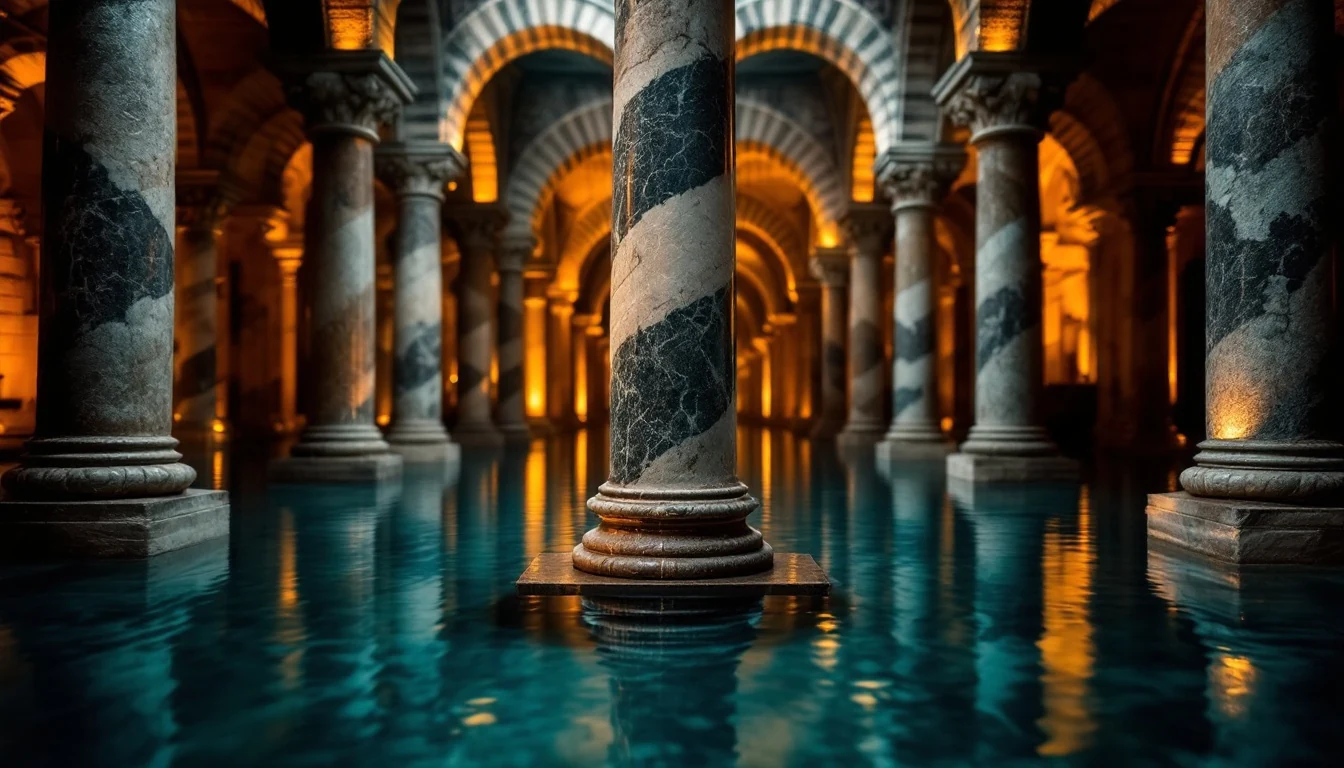
Underground reservoirs used rows of columns and vaulted roofs to support large enclosed spaces. Reused stone could appear in these structures, just as it did in other Byzantine buildings. The builders used what was at hand while meeting the needs of the city. World History Encyclopedia
Cisterns also belong beside the walls in an account of urban survival. The walls protected the city from attack. The cisterns helped sustain its people. Both depended on upkeep over time.
UNESCO includes monumental cisterns among the types of building that bear witness to Istanbul's Byzantine past. Their presence helps explain why the city's history reaches beyond its best-known church. UNESCO
The Hippodrome: racing, power and monuments
The Hippodrome was a setting for chariot races and public gatherings near the imperial palace. Constantine enlarged an earlier racing ground and brought monuments into the capital. Surviving pieces mark the area now associated with Sultanahmet Square. World History Encyclopedia
The Serpent Column came from Delphi and commemorated an earlier Greek victory. Other monuments added to the capital's public display. Such objects linked Constantinople with older centres of power and culture.
Crowds at the races could also express anger. Public entertainment and imperial politics met in the same space. The Hippodrome was more than a sports ground. Here the ruler and the city's people met.
Together, these surviving sites provide a useful route through Bizans history. The church shows worship and royal patronage. The walls show defence.
The cisterns show daily needs. The Hippodrome shows public life and the display of power.
Verdict: Bizans empire
Bizans empire refers to the Turkish historical name for the Byzantine, or Eastern Roman, Empire. Its capital's surviving buildings in Istanbul give the name a concrete setting. Look at each landmark's first use and later changes. These layers show the city's long imperial past.
Sources checked for this page
- TDV Encyclopedia of Islam: Bizans
- Historic Areas of Istanbul - UNESCO World Heritage Centre
- Constantinople - World History Encyclopedia
- Byzantine Empire - World History Encyclopedia
- Byzantine Architecture - World History Encyclopedia
Questions people also ask
What is the Bizans empire?
Bizans is the Turkish name for the Byzantine Empire, also known as the Eastern Roman Empire.
Is Bizans the same as Byzantium?
Yes, in this historical context. They are Turkish and English forms referring to the Byzantine state.
Was Istanbul the Byzantine capital?
Modern Istanbul occupies the site of Constantinople, the empire's capital.
What Byzantine buildings survive in Istanbul?
Examples include Hagia Sophia, the land walls, churches, cisterns and monuments around the former Hippodrome.
When was the surviving Hagia Sophia built?
It was built under Justinian between 532 and 537.
Did the people of Bizans call themselves Romans?
Yes. Roman identity remained central even as Greek became the main language of the medieval state.